

How Does Mind Your Sleep Work?
We don’t force Sleep. We remove what blocks it. Our method focuses on nervous system signaling — not discipline.The System of 4 Pillars:
Pillar 1: Physical alignment
Philosophy:
Structure matters. When cervical alignment is lost, your body and sleep are affected.
In Practice:
- The Neck Pain & Sleep Reset Kit™ supports natural spinal curves
- Removes muscular guarding that prevents deep rest
- Trains the body to rest correctly over time
- Not instant comfort — lasting correction
Key Phrase:
"Structure creates the conditions for your body and sleep."
Pillar 2: Nervous system awareness
Philosophy:
Presence matters - train the body to release. An alert body and nervous system can't sleep, no matter how comfortable the bed and pillow.
In Practice:
- Body Mindfulness courses help you develop conscious body awareness.
- Mind and body connection through the 5 Rules
- Breath, movement, and presence practices
- Reconditioning, not relaxation techniques
Key Phrase:
“Mindfulness/ Awareness teaches the body and nervous system safety."
Pillar 3: Consistency over comfort
Philosophy:
Truth matters - results come from patience, not tricks. Real changes require patience and understanding.
In Practice:
- Adaptation takes weeks, not days
- Temporary discomfort ≠ failure
- Results come from sustained practice
- No hacks, no shortcuts, no tricks
Key Phrase:
"Consistency creates transformation."
Pillar 4: Sustainability over consumption
Philosophy:
Responsibility matters. One tool. One lifetime. Zero waste. The planet doesn't need more waste.
In Practice:
- One sleep tool, lifetime warranty
- €395 once vs. €2,700-5,400 over lifetime
- Sustainable materials, ethical production
- Heirloom quality that can be passed down
- Lithuania-made craftsmanship
Key Phrase:
"The most sustainable product is the one you never replace.”
System
Our Belief System.
Core Belief: "Comfort soothes symptoms. Alignment solves problems."
About Sleep:
- Sleep isn't a performance to optimize
- Sleep is a natural result when conditions are right
- Those conditions are: physical alignment, body and nervous system awareness and security, consistency, and sustainability always.
About Products:
- One exceptional product beats many mediocre ones
- Durability is environmental responsibility
- Premium price reflects lifetime value, not luxury
- Correction matters more than immediate comfort.
About Wellness
- Quick fixes create dependency
- Root causes require patience
- Transformation happens through understanding, not willpower
- Your body knows how to heal when interference is removed
About Sustainability:
- The most sustainable product is the one you never need to replace
- Planned obsolescence is environmental violence/ or harms our planet
- Conscious consumption means buying once, buying well
- Heirloom quality isn't luxury — it's responsibility.
Problem
Our Enemy
If your body isn’t properly aligned and your nervous system doesn’t feel secure, your sleep simply can’t function optimally. No amount of softness can fix that. We don't add more tricks. We remove what's interfering.
1. Comfort-First Products (Without Structure)
- Soft pillows that feel good but fix nothing
- Memory foam that adapts to your problems instead of correcting them
- Products designed for immediate sensation, not long-term health
2. Disposable Wellness Culture
- Replace every 18 months forever
- Lifetime cost of €2,700-5,400 on pillows alone
- Landfills are full of synthetic materials
- Planned obsolescence disguised as “hygiene.”
3. Hack-Based Sleep Solutions
- Pills, sprays, supplements that sedate, don't restore
- Apps and gadgets that measure but don't solve
- Quick fixes that treat sleep like a trick instead of a system
4. Symptom-Masking Approaches
- Treating pain without addressing the cause
- Adding more products instead of removing interference
- Endless consumption without transformation

For people
Who do we serve?
What the Tool does?
What It's not?
Solution
Mind Your Sleep Solutions
Because of widespread screen use, phone neck syndrome now affects an incredible number of people worldwide.
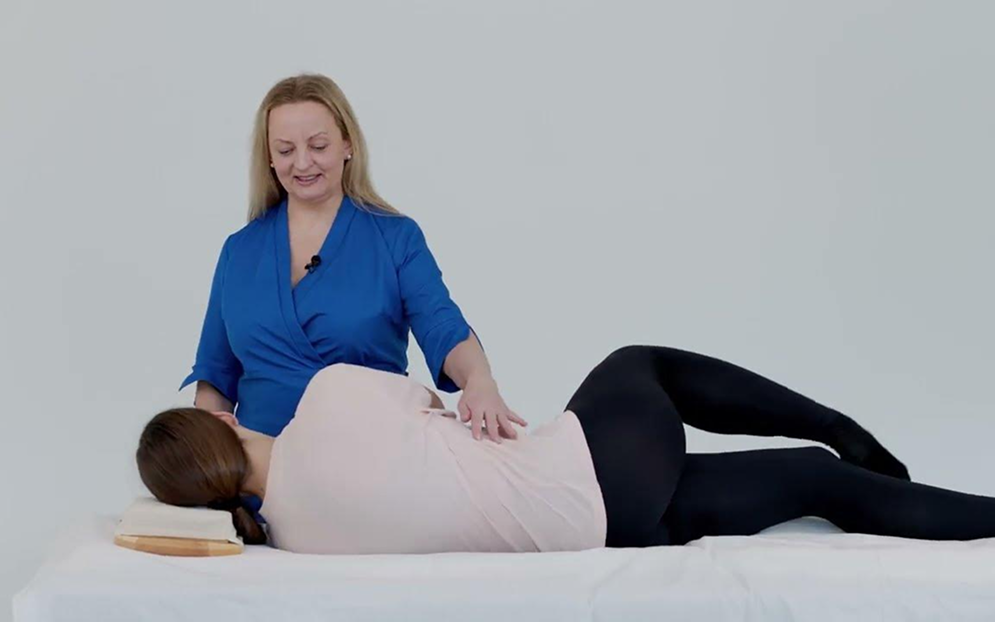
Body Mindfulness Courses & Short Videos
Neck Pain & Sleep Reset Kit™ by Unusually Usual®
Not just comfort. Lasting correction.

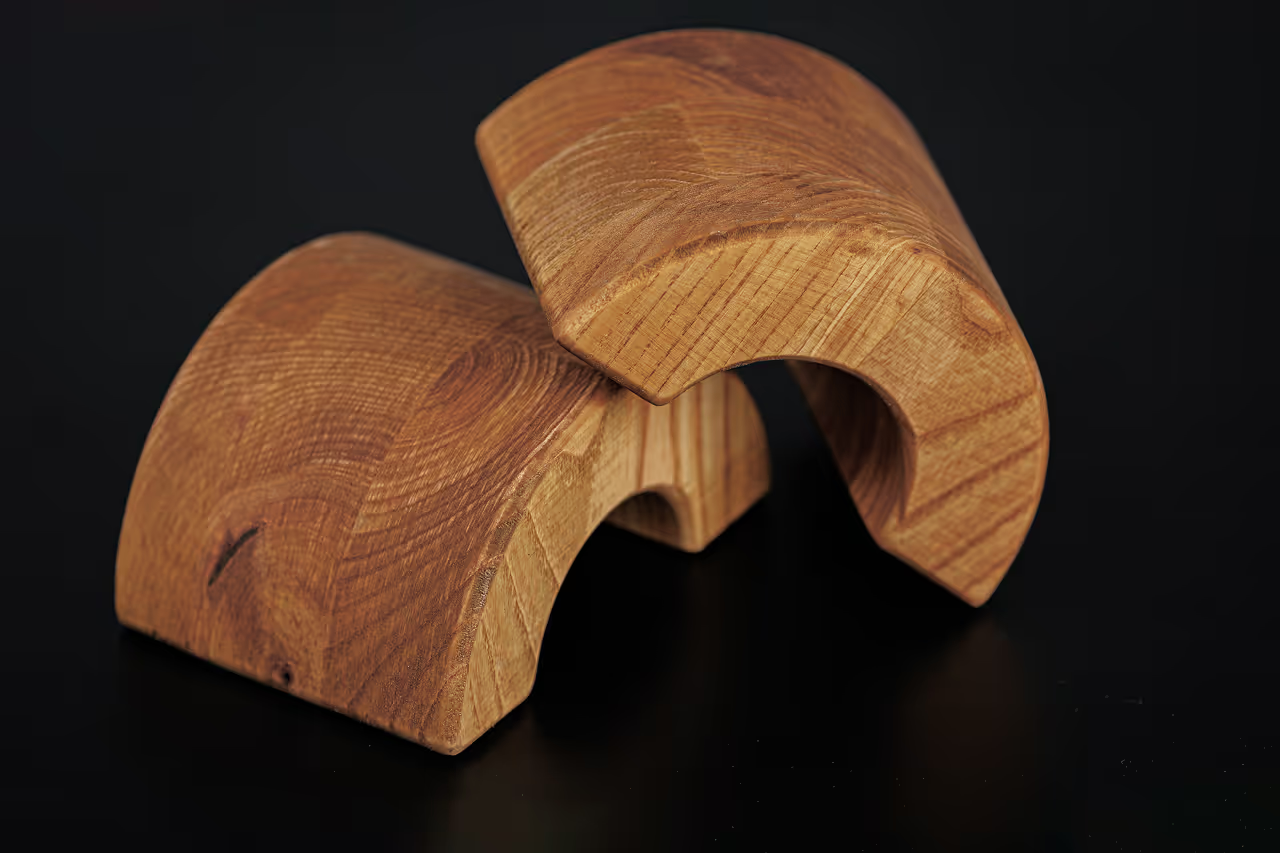
Wooden ARCH™ by Unusually Usual ®
Introducing the ARCH™ by Unusually Usual ® - the ultimate versatile physiotherapy tool created to empower your self-care routine. Whether you seek rehabilitation, soothing self-massage, targeted self-rolling, energizing exercise, or pure relaxation, the ARCH™ by Unusually Usual® brings professional-grade wellness into your own hands.
Consulting Packages, Workshop Programs & Coaching Sessions


Testimonials
Experiences of those who listened to their bodies
If you don't try, you'll never know!

Rastislav Dluhy
Priest, long-time practitioner
13 Years with Ilona · Physical and Mental Transformation
Following Ilona’s advice, I started sleeping with the wooden sleep KIT™. Not everything went smoothly at first. The firmness sometimes made it hard to fall asleep, so I kept a regular pillow nearby—just in case. Soon, it became unnecessary. The most important discovery: my hands stopped tingling, and my hunchback diminished.

Dr. Lina Šulcienė
Associate professor of philosophy at Vytautas Magnus University
Hand numbness disappeared · Posture improved
During my work, I have to sit a lot in front of the computer, which makes my hump increase. A wooden sleep tool not only helps to correct my posture, but also gives me the gift of a good night's sleep.

Dr. Artūras Lukaševičius
Professor at Vytautas Magnus University
Sleep has improved · Corrected posture

WHAT USERS REPORT
FROM THE FOURTH WEEK ONWARD
What’s this for?
This is What's Keeping You Awake.
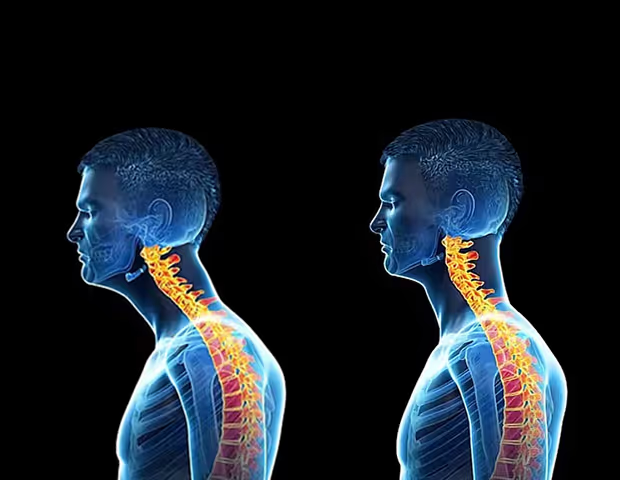
Phone neck syndrome
Phone Neck Syndrome develops when the cervical spine is held in a forward-flexed position for hours every day. The result is progressive structural damage — and it continues at night if what you sleep on does not restore the natural curve.

Stress
Stress is a biological response to a perceived threat. It’s caused by chemicals and hormones surging throughout your body. Stress can help you respond to a particular problem, but too much of it can harm your health.

Depression
Insomnia is a common symptom of depression and anxiety. There’s also a two-way relationship between sleep disorders and depression. About 90 percent Trusted Source of people with depression have sleep complaints such as insomnia, hypersomnia, sleep disordered breathing, or restless leg syndrome.
.avif)
Anxiety
Anxiety is a typical human reaction to stress. But too much anxiety can interfere with living a healthy, happy life. According to Mental Health America, nearly two-thirds of Americans state that stress causes them to lose sleep.Stress and anxiety often go hand in hand.
A little about me, without the pitch.
Where I Begin?
What I've seen and understood?
All people need healthy sleep support, but not all need therapy.
Why I keep going?
Built for Real Life
About us in media
As seen in the press.

An Interview With Shawna Robins
Solving Insomnia: Ilona Navickiene of Mind Your Sleep by Unusually Usual 'On 5 Proven Strategies to Help You Sleep Through the Night'
Ecology of mind and body
This topic was introduced in the LRT television broadcast by VM University Professor of Theology Dr. Artūras Lukaševičius and public health and body expert Ilona Navickiene.

How can a mom get enough sleep?
How can you possibly get 'quality sleep' while raising a baby? Many mothers report that they haven’t had a full night’s rest in an entire year by Ilona Navickiene.

The She Wins Magazine “Season of Thanks: Women Who Lead With Grace,”
A Quiet Introduction of Ilona Navickiene and Her Unique Approach
24/7 Complete transformation system
Three ways to work with your body.
One integrated system.
KIT™ supports you during sleep.
ARCH™ helps you take care of your body throughout the day.
The courses guide you while you are awake.
Together, they support your well-being around the clock.
Neck Pain & Sleep Reset Kit™
Structural neck and spine correction while you sleep.
Corrective neck and spine alignment tool
Created by Ilona Navickienė —
over 30 years of clinical experience with real people. Handcrafted in Lithuania
One-time investment - built to last a lifetime
90-Night Guarantee. Thirty of them on it.
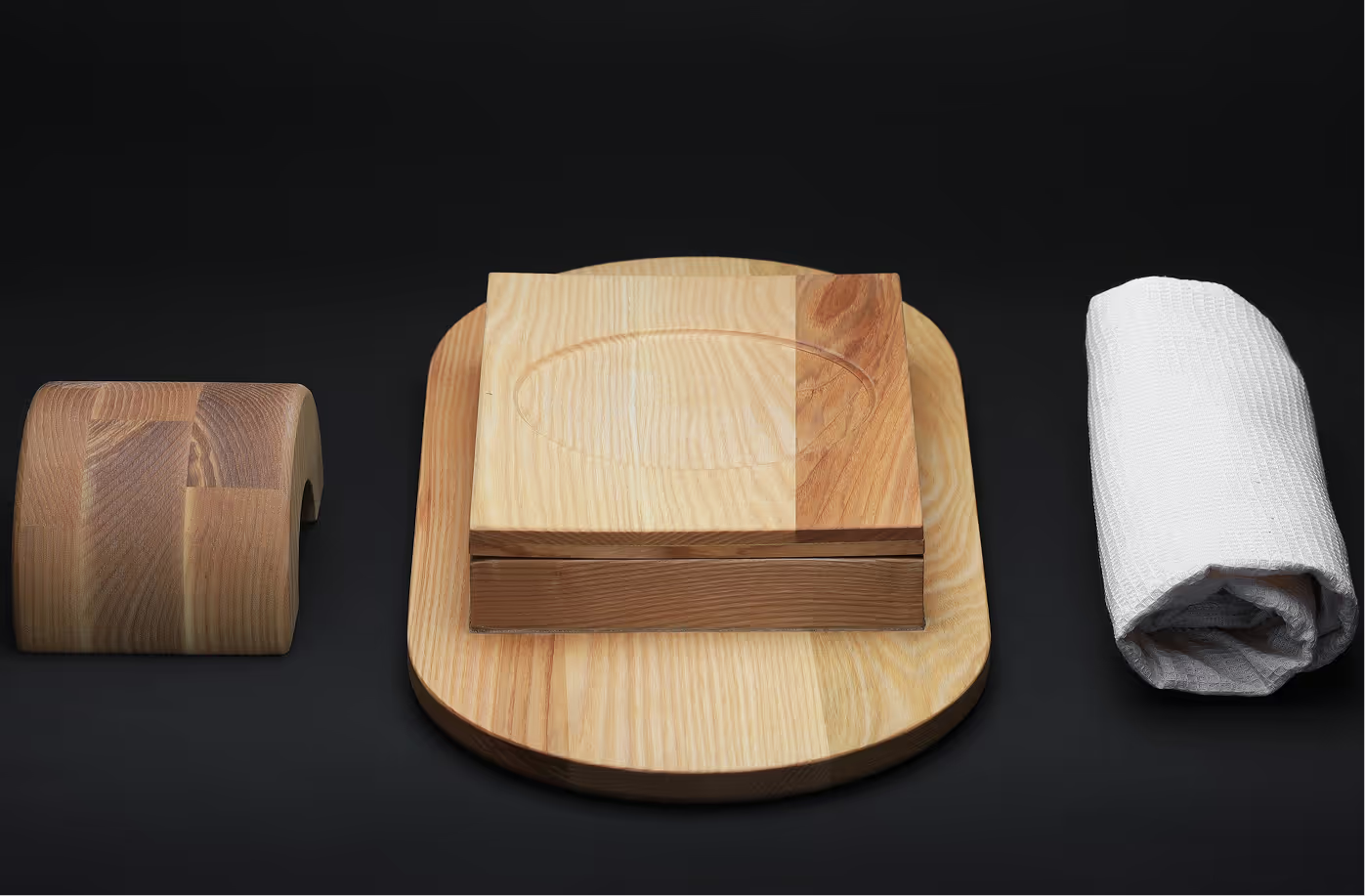
The ARCH™ by Unusually Usual®
Ten to fifteen minutes a day of active ARCH™ use.
Decompresses the thoracic spine, releases diaphragm tension
Restores fascial gliding, short video practices included
One-time investment - built to last a lifetime
Created by Ilona Navickienė — over 30 years of clinical experience with real people. Handcrafted in Lithuania.
90-Night Guarantee. Thirty of them on it.

Body Mindfulness courses.
Mindful movement, breathing, and posture - learned at home.
Structured 3–4 week programs
Short video practices (3–40 minutes)
Video library filterable by body area
30-Day Money-Back Guarantee
Ambassador
Become an Unusually Usual ambassador

Questions answered
Frequently asked questions
What is Phone Neck Syndrome, and how does it affect sleep?

Phone Neck Syndrome (also called text neck or forward head posture) is a structural condition caused by the chronic forward tilt of the head while looking at screens. For every centimetre the head moves forward from its neutral position, the effective weight on the cervical spine increases by roughly 2–3 kg. At a 45° forward tilt — common during phone use — this places up to 22 kg of additional load on the neck. Over months and years, this collapses the natural cervical C-curve, compresses intervertebral discs, and narrows the spinal canal. The direct sleep consequence: a misaligned cervical spine activates the sympathetic nervous system (the body's stress response), preventing the parasympathetic state required for deep, restorative sleep. This is why neck pain and poor sleep almost always coexist — they share the same structural root cause.
→ Full guide: What Is Phone Neck Syndrome? mindyoursleep.com/articles/phone-neck-syndrome
What are the long-term consequences of untreated forward head posture?
Untreated forward head posture progressively worsens across five domains: (1) Structural — progressive loss of the cervical lordosis (the natural C-curve), leading to disc degeneration, osteophyte formation, and potential spinal stenosis. (2) Neurological — chronic compression of cervical nerve roots, causing radiating pain, arm numbness, and reduced hand grip strength. (3) Circulatory — restricted blood and cerebrospinal fluid flow to the brain, associated with cognitive fog, headaches, and fatigue. (4) Sleep — inability to reach restorative parasympathetic sleep states, leading to chronic sleep fragmentation. (5) Systemic — long-term sleep deprivation is associated with elevated cortisol, immune suppression, metabolic disruption, and cardiovascular risk. Early structural intervention — rather than symptom management — is the clinically recommended approach.
How many hours a day does the average person spend with their head forward?
Research from the American Journal of Pain Management estimates that adults spend an average of 7–10 hours daily in forward head posture across combined screen time (phones, computers, tablets). At a conservative 45° forward tilt for 4 of those hours, this places approximately 22 kg of sustained compressive load on the cervical spine daily. Over a year, this equates to thousands of hours of structural stress with no corrective counterforce — unless sleep position actively restores alignment. This is the central premise of the Mind Your Sleep method: the 7–8 hours spent sleeping are the only consistent window in which the cervical spine can structurally decompress and realign.
Can Phone Neck Syndrome be reversed without surgery?
In most cases, yes — provided the structural intervention addresses the root cause (cervical curvature loss) rather than just symptoms (pain and tension). Clinical evidence supports that consistent restoration of the natural cervical lordosis during sleep — using a device that provides the correct anatomical support angle — can measurably improve disc hydration, widen the spinal canal, and expand intervertebral foramina over an 8–12 week period, as documented in MRI studies. Key factors for non-surgical reversal: (1) sleeping in a position that supports cervical neutral alignment every night, (2) reducing forward-load activities during the day, (3) activating the deep cervical flexor muscles through targeted exercises. Surgical intervention is typically considered only when conservative approaches fail after 6–12 months, or when neurological symptoms are progressive.
What is the cervical C-curve, and why does it matter?
The cervical lordosis—commonly called the cervical C-curve—is the natural inward curvature of the neck’s seven vertebrae (C1–C7). It functions as a structural shock absorber, distributing the weight of the head (approximately 5–6 kg) evenly across the cervical discs and facet joints. This curve also maintains optimal spacing of the intervertebral foramina—the small openings through which cervical nerve roots exit the spine. When this curve is lost—a condition known as cervical kyphosis or military neck—load distribution becomes uneven, disc pressure increases, nerve roots may become compressed, and blood flow through the vertebral arteries can be reduced by up to 30%. Restoring and maintaining this curve—particularly during the 7–8 hours of nightly sleep—is the structural foundation of cervical health.
Why does neck alignment affect sleep quality?
Sleep quality is directly regulated by the autonomic nervous system—specifically, the balance between sympathetic (alert, stress) and parasympathetic (rest, restore) states. The cervical spine houses the primary pathway of the vagus nerve, which activates parasympathetic function. When cervical alignment is compromised, mechanical tension on this pathway increases sympathetic tone, keeping the nervous system in a mild state of alert—even during sleep. The result: lighter sleep stages, more frequent micro-arousals, reduced REM duration, and non-restorative sleep—even when total sleep hours appear adequate. Correct cervical alignment during sleep removes this mechanical tension and allows the parasympathetic system to fully activate. Clinical studies have documented that patients with corrected cervical alignment report a 47% improvement in subjective sleep quality scores within two weeks of consistent structural support.
What is the best sleeping position for neck pain?
For people with neck pain, the optimal sleep position is back sleeping with a device that maintains the natural cervical lordosis — typically requiring a support height of 7–12 cm depending on shoulder width and individual anatomy. Side sleeping can also be effective, provided the support height matches the distance between the ear and shoulder to keep the cervical spine in a neutral, non-lateral-bent position. The worst position for neck pain is stomach sleeping, which forces the head into maximal rotation for hours at a time, compressing facet joints and dramatically increasing disc pressure. The critical factor in any position is maintaining the cervical C-curve: the support must be firm enough to resist compression over 8 hours, which is why traditional soft pillows — regardless of material — fail to provide structural correction.
How does sleep position affect the cervical spine overnight?
During sleep, intervertebral discs rehydrate through a process called imbibition — absorbing fluid from surrounding tissue when spinal load is reduced. This process is position-dependent: correct cervical alignment maximises disc rehydration, while misalignment (forward head, lateral flexion, or axial rotation) creates uneven pressure that inhibits it. MRI studies of consistent users of structurally correct cervical sleep supports documented measurable improvements in disc hydration, widening of the spinal canal, and expansion of intervertebral foramina after 5–8 weeks of use. Conversely, 7–8 hours in a structurally incorrect position — such as on a soft, compressible pillow — applies continuous asymmetric load to the cervical spine, undoing any postural corrections made during the day.
What is the difference between the Neck Pain & Sleep Reset Kit™ and a memory foam pillow?
The fundamental difference is corrective intent. Memory foam pillows are comfort products: they adapt to the existing position of the head and neck, providing cushioning without structural correction. The Neck Pain & Sleep Reset Kit™ is an orthopaedic correction device: it maintains a fixed, anatomically calibrated support angle to restore the cervical C-curve, regardless of the head’s natural tendency to settle into incorrect positions.
Practical differences:
- Memory foam loses its shape within 18–24 months and requires replacement—a lifetime cost of €1,350–2,700+ at average pillow prices.
- The Kit™ is a single, lifetime purchase.
- Memory foam off-gasses volatile organic compounds; the Kit™ is made from natural ash wood with zero off-gassing.
- Memory foam does not provide the structured ARCH™ decompression tool or the clinical education included with the Kit™.
Most importantly, memory foam treats sleep as a comfort event. The Kit™ treats sleep as a structural restoration window.
Is the Neck Pain & Sleep Reset Kit™ better than physiotherapy for neck pain?
These are not competing approaches — they address different timeframes of the same problem, and work best in combination. Physiotherapy addresses cervical dysfunction during the day: manual therapy, targeted exercises, and postural retraining. The Kit™ addresses the 7–8 hours of sleep during which the spine is either restoring or continuing to deteriorate. The most common failure in physiotherapy-only approaches is the night: patients make daytime progress, then spend 7–8 hours in a structurally incorrect sleep position, partially resetting the gains. The Kit™ extends the therapeutic window into the night, complementing physiotherapy rather than replacing it. Clinical evidence: consistent users of the Kit™ report 77% reduction in neck pain and 68% reduction in headache frequency over 90 nights — outcomes comparable to, and often exceeding, those from periodic physiotherapy alone.
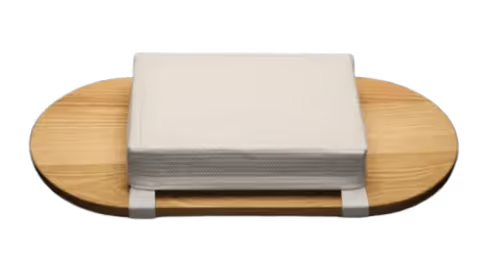
Investment in your wellness
Your body has been waiting long enough.
The Neck Pain & Sleep Reset Kit™ — designed and tested across diverse body types and sleep positions.
90-Night Guarantee · Lifetime Warranty · Ships Worldwide · EU-Registered
Want to see howwe helppeople?
Free resources, from the heart

& get a free webinar now!