
What Is Phone Neck Syndrome? Causes, Effects and Structural Fixes
Phone neck is more than a posture habit. Hours of looking down load the neck far beyond its neutral weight — and the most common fixes don't change how the neck is supported at night.
October 16, 2026
·
Ilona Navickienė, Founder
·
Reading time:
~
1
min.
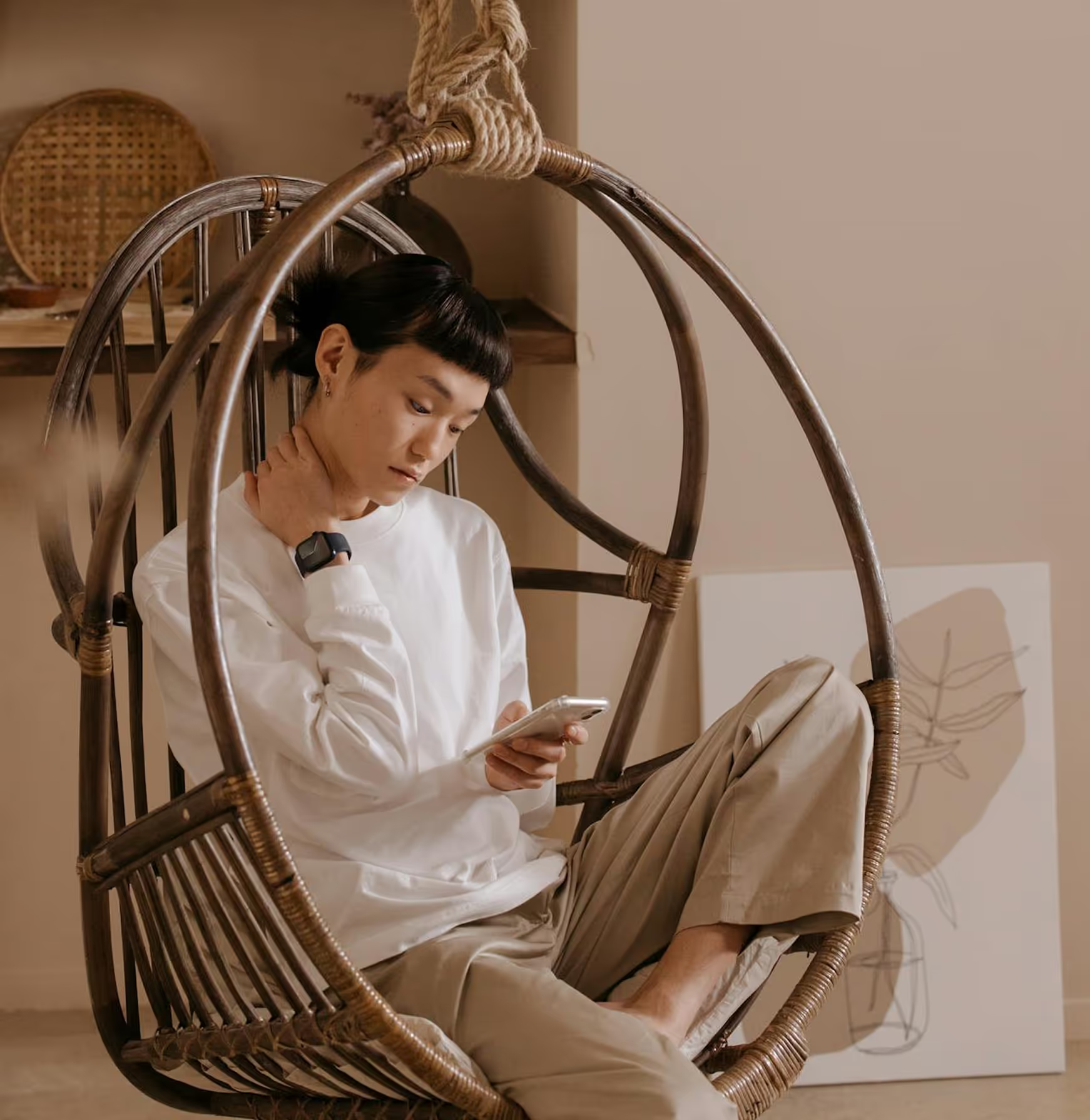
Your head weighs roughly 4.5–5.5 kg in a neutral position. A widely cited biomechanical model estimates that tilting it forward 45 degrees — a typical phone-reading angle — raises the effective load on your cervical spine to about 22 kg, and at 60 degrees to about 27 kg. [1] It is a computer model rather than a measurement from anyone's neck, but the principle it shows is clear: the further forward the head, the heavier the load. Repeated for hours a day, across years, that load adds up.
This article explains what that load can affect, which common fixes leave it unchanged — and why how your neck is supported at night matters as much as how you hold your phone by day.
Definition and Etymology: Phone Neck vs. Text Neck vs. Forward Head Posture
The term text neck is usually credited to chiropractor Dr. Dean Fishman, who began using it around 2008 to describe the posture he saw as smartphones spread. It was a useful name for a new everyday habit.
Forward head posture is the broader anatomical description: the head sits forward of the shoulders, changing how the whole neck and upper back are loaded. It is the established clinical term, but it doesn't name a cause — forward head posture existed long before smartphones.
Phone Neck Syndrome is not a formal medical diagnosis, but it is the most descriptive everyday term: it names the cause (long hours of screen use), the mechanism (repeated forward loading of the neck) and the pattern — a group of related symptoms rather than one isolated complaint. It is the term used throughout this article.
Does this sound familiar? See how neck tension, morning headaches, posture and sleep are connected.
See the problems we solveThe Biomechanics: How Screen Use Changes Cervical Load
The cervical spine is built around a gentle forward curve — the lordosis — which spreads the weight of the head across the discs and joints of the neck. When that curve is held in a comfortable, neutral position, the neck carries the head with little effort.
When the head tilts forward, the lever arm lengthens and the load rises steeply. The values below come from a 2014 biomechanical computer model — estimates, not measurements — but they show how quickly the load grows with angle: [1]
Modelled load on the cervical spine by head angle
In the model, the same head carries about 27 kg of load at 60°
| 0° neutral | 4.5–5.5 kg |
|---|---|
| 15° | ~12 kg |
| 30° | ~18 kg |
| 45° | ~22 kg |
| 60° | ~27 kg |
Source: Hansraj KK. Assessment of stresses in the cervical spine caused by posture and position of the head. Surgical Technology International. 2014;25:277–279. PMID: 25393825. A computer model; values are estimates.
Many adults now spend several hours a day looking down at a phone or tablet. At four hours a day, that adds up to more than 1,400 hours a year with the neck loaded well above its neutral weight.
Sustained forward head posture is associated with recurring neck and shoulder pain, muscle tension and tension-type headaches. Whether it causes lasting structural damage to the spine is less clear — the research is mixed, and we don't claim that it does.
Muscle tension is often the body's way of bracing against that load. Massage, heat or occasional stretching ease the tension — but they don't change how the neck is loaded by day or supported at night.
Beyond the Neck: What Phone Neck Can Affect
Neck strain rarely stays in the neck. People with phone neck often describe symptoms that seem unrelated — disturbed sleep, morning headaches, tingling in the hands, low energy. Here is what is reasonably understood about each, and where the evidence stops.
Sleep
Pain and muscle tension keep the nervous system in a more alert state, which works against the settling that deep sleep needs. People describe waking more often and feeling unrefreshed, even after a full night.
Headaches
Tight muscles at the top of the neck are a common source of cervicogenic and tension-type headaches, often felt at the base of the skull or behind the eyes. See a doctor for any new, severe or sudden headache, or one that comes with fever, weakness or changes in vision.
Hands and arms
The nerves to the arms and hands leave the spine in the neck. Tingling or numbness in the hands can have several causes, including nerve irritation in the neck — it is a symptom to have checked by a clinician, not to treat on your own.
Energy and focus
Poor sleep and constant low-level tension make it harder to concentrate, and energy tends to dip through the afternoon — a familiar pattern in screen-heavy work.
Eyes
Long hours of close screen work cause digital eye strain — tired, dry or blurry eyes. Neck and shoulder tension often travel with it in screen-heavy work.
Upper back and breathing
A forward head tends to round the upper back. Sustained slumped posture is associated with upper-back and shoulder tension. Some studies also link it with shallower breathing, but the evidence is limited.
“Every person I've worked with had a body that was not broken — only misunderstood.”
What Does Not Work: The Insufficient Interventions
Most people who recognise phone neck reach for one or more of four common solutions. Each helps with something — but none of them changes how your neck is supported for the 6–8 hours you sleep.
Common solutions — they ease symptoms
What eases the pain — but not how your neck is supported
Soft or memory-foam sleep surfaces. They mould to whatever position your head is already in and compress under its weight. The neck can spend the night in the same strained position it was in all day — which is why many people feel their worst on waking.
Posture apps and reminders. Posture awareness is genuinely valuable, but a notification only reaches the minutes you're awake and paying attention. It does nothing for the hours you sleep.
Occasional stretching. Stretching can ease tension and give real short-term relief. But muscles that spend long hours in the same position tend to return to it, so lasting change needs consistent support, not occasional stretching alone.
Massage on its own. Massage works on the muscles, and does it well. The familiar pattern of relief followed by the tension returning isn't a failure of massage — it's because the strain comes from how the neck is loaded and supported, not only from the muscles themselves.
The missing piece: what happens while you sleep
Sleep is when the body recovers. Spinal discs regain a little height while you lie down, and the muscles get their longest chance to rest. If those 6–8 hours are spent with the neck at a poor angle, the muscles keep working instead of recovering — and you start the next day already tense.
What Does Work: Support at Night, Awareness by Day
Lasting change comes from two inputs working together, consistently, over weeks — not from either one alone.
Our approach — day and night
Two inputs that work together
At night: consistent support. A firm support, adjusted to your body and sleep position, keeps your neck in a neutral position through the night, so the muscles can release instead of bracing. Height matters: research shows support height changes how hard the neck muscles work and how the cervical spine is aligned during sleep — especially on your side. [2][3][4]
By day: awareness and movement. Short daily practices — breaks from the screen, strengthening the deep neck muscles, breathing and posture awareness — change how the neck is loaded during the hours you're awake.
Neither input replaces the other, and neither works overnight. That is why we describe the change as an adaptation over weeks.
-
Nights 1–3 · A new position
Not relief. Position.
The first thing you'll notice is how differently your head rests — not relief. Sleep may be lighter for a night or two: on the first night in any unfamiliar sleep environment, one half of the brain stays partly alert. It usually passes within a night or two. [7]
-
Weeks 1–2 · Adaptation phase
You adapt
The first nights feel unfamiliar — your neck has held one shape for years and is being asked to hold another. Some temporary stiffness is normal. Around week two, research takes its first readings. [5]
-
Weeks 3–4 · Adaptation phase
The body responds
Many people first notice that their mornings feel different — not that their pain has eased. It's easy to miss, because it isn't what you're looking for.
-
Weeks 5–8 · Consolidation phase
New habits take hold
Sleep position stabilises and tension eases. Many people stop noticing the firmness of the support at night — a sign the body is adapting to it.
-
Month 3 · The outcome window
Where studies measure
The largest sleep-surface trials measure their results at around ninety days — which is why our guarantee runs for ninety nights. [6]
The Mind Your Sleep Approach
Mind Your Sleep by Unusually Usual was built around one idea: the hours you sleep are the longest stretch of the day your neck spends in a single position — and most sleep products are designed for comfort, not for the height that position needs.
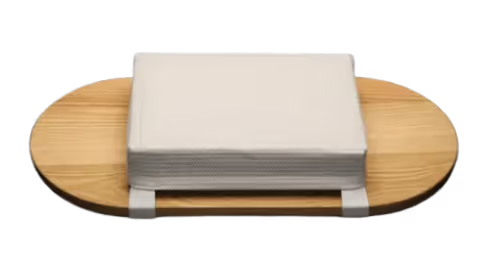
The Neck Pain & Sleep Reset Kit™ is a corrective alignment tool: a hand-finished Lithuanian ash sleep support with an adjustable-height insert, supplied with the Wooden ARCH™ and a digital programme. It has not been tested in its own clinical trial, and we claim no CE mark or medical-device approval. It applies principles that published research supports — that support height and shape affect neck alignment and muscle load during sleep. The evidence, and its limits, are set out on our clinical claims page.
The adjustable insert lets you set the height for your build and for back or side sleeping. Solid ash keeps its shape and firmness under the weight of your head, has no synthetic foam and no off-gassing coating, and carries a lifetime warranty.
For the daytime side — posture, breathing and movement — the Body Mindfulness courses by Ilona Navickienė offer a structured programme. The courses teach the principles; the Kit™ supports your neck while you sleep.
“It took a week to become normal. I really feel: how easy it is to breathe.”
Key facts
EU-protected original · Registered design No. 009206642-0001
A corrective alignment tool for back and side sleeping — try it for 90 nights. All we ask is thirty of them.
Research-based design. Lifetime warranty. Natural Lithuanian ash, hand-finished in Lithuania. The evidence — and what it doesn't show — is there for you before you decide.
Explore the Kit™View clinical evidenceNot a satisfaction guarantee — an adaptation guarantee. Sleep on the Kit™ for thirty nights first; if your mornings haven't changed, we'll refund you.
People also ask
Common questions about Phone Neck Syndrome
Short answers to the questions people ask most about phone neck.
Can phone neck be improved without surgery?
For most people, neck pain linked to posture is managed without surgery — clinical guidance generally recommends conservative care such as movement, exercise and changes to daily habits first. Useful steps include breaking up long screen sessions, strengthening the deep neck muscles, and making sure your head is supported at a suitable height at night. We don't claim our products reverse any condition. Surgery is a decision for you and a specialist, and symptoms such as arm numbness, weakness or worsening pain should always be assessed by a clinician.
→ Full answer: What does work: support at night, awareness by day
How long does phone neck take to develop?
There is no reliable timeline. Neck stiffness and tension can appear within weeks of heavy screen use, but how quickly — and whether — lasting changes follow varies from person to person, and research doesn't give a fixed figure. What helps at any stage is the same: breaks from the screen and good support for your neck at night.
→ Full answer: How screen use changes cervical load
Does phone neck cause headaches?
It can. Headaches felt at the base of the skull or behind the eyes are often cervicogenic — pain referred from tight muscles at the top of the neck rather than a problem in the head itself. If the neck isn't well supported through the night, those muscles can stay tense for hours. See a doctor for any new, severe or sudden headache, one that is different from your usual pattern, or one that comes with fever, weakness, confusion or changes in vision.
→ Full answer: What phone neck can affect
Is phone neck the same as tech neck?
Largely, yes. Tech neck is the broader term covering all screen devices — phones, tablets and laptops. Phone neck points specifically to looking down at a handheld device, which tends to involve the steepest angles: a widely cited biomechanical model estimates about 22 kg of load at 45° and 27 kg at 60°. [1] Both describe the same pattern of forward loading on the neck.
→ Full answer: Phone neck vs. text neck vs. forward head posture
Can children and teenagers develop phone neck syndrome?
Young people use screens heavily too, and neck and shoulder discomfort is increasingly reported in children and teenagers. Research on whether screen posture permanently changes a growing spine is limited, so we don't make that claim. Regular breaks, movement and a comfortable sleep position all help. Ask a doctor or paediatric physiotherapist about persistent pain, and before using any sleep support with under-16s.
Which specialist diagnoses and treats phone neck syndrome?
Assessment is usually done by a physiotherapist, an orthopaedic specialist or a neurologist, depending on whether the main symptoms are muscular, structural or neurological. An X-ray shows the angle of the neck's curve; MRI can assess the discs and nerves when needed. Supportive measures — sleep position, exercise and posture awareness — work alongside, not instead of, any care a clinician recommends.
→ Read more: When to get your neck checked
Medical disclaimer: This article is for informational and educational purposes only and does not constitute medical advice. Mind Your Sleep by Unusually Usual does not diagnose, treat or cure any medical condition. Always consult your qualified healthcare provider before making changes to your health management or sleep routines. Research is cited with its limits; individual experiences vary.
References
- Hansraj KK. Assessment of stresses in the cervical spine caused by posture and position of the head. Surgical Technology International. 2014;25:277–279. PMID: 25393825. A computer model; values are estimates.
- Lei JX, Yang PF, Yang AL, Gong YF, Shang P, Yuan XC. Ergonomic considerations in pillow height determinants and evaluation. Healthcare (Basel). 2021;9(10):1333. https://pmc.ncbi.nlm.nih.gov/articles/PMC8544534/
- Pang JCY, Tsang SMH, Fu ACL. The effects of pillow designs on neck pain, waking symptoms, neck disability, sleep quality and spinal alignment in adults: a systematic review and meta-analysis. Clinical Biomechanics. 2021;85:105353. https://pubmed.ncbi.nlm.nih.gov/33895703/ — The review found no effect on subjective sleep quality.
- Jiao R, et al. The impact of pillow height on neck muscle activity: a pilot study. Sleep and Breathing. 2024. https://pubmed.ncbi.nlm.nih.gov/39625641/
- Yamada S, Hoshi T, Toda M, Tsuge T, Matsudaira K, Oka H. Changes in neck pain and somatic symptoms before and after the adjustment of the pillow height. Journal of Physical Therapy Science. 2023;35(2):106–113. https://pmc.ncbi.nlm.nih.gov/articles/PMC9889209/
- Kovacs FM, Abraira V, Peña A, et al. Effect of firmness of mattress on chronic non-specific low-back pain: randomised, double-blind, controlled, multicentre trial. The Lancet. 2003;362(9396):1599–1604. https://pubmed.ncbi.nlm.nih.gov/14630439/ — Cited for its ninety-day measurement point only.
- Tamaki M, Bang JW, Watanabe T, Sasaki Y. Night watch in one brain hemisphere during sleep associated with the first-night effect in humans. Current Biology. 2016;26(9):1190–1194. https://pubmed.ncbi.nlm.nih.gov/27112296/
Our approach
Neck Pain & Sleep Reset Kit™
Physiotherapist-designed · EU-protected original · 90-Night Adaptation Guarantee · Lifetime Warranty

Self-assessment · Phone Neck Syndrome
What your neck does while you sleep
Seven questions. Sixty seconds. A plain reading of the pattern in your answers: how your neck feels in the morning, what the day asks of it, and whether your nights give any of that back.
Begin Self-assessment




Investment in your wellness
Your body has been waiting long enough.
The Neck Pain & Sleep Reset Kit™ by Unusually Usual® -
a registered Community design, made for a range of body types and sleep positions.
begin my recovery
90-Night Guarantee · Lifetime Warranty · Ships Worldwide · EU-Registered
Mind Your Sleep
Get Unusually Usual now
mind your Sleep
get UNUSUALLY USUAL now
Want to see howwe help people?
we help
people?
Free resources, from the heart

Workshops
Body Mindfulness Videos
PDFs
Join Unusually Usual ® Followers
& get a free webinar now!
& get a free webinar now!
Thank you! Your submission has been received!
Oops! Something went wrong while submitting the form.