
FAQs
General
Frequently asked questions
What is phone neck syndrome, and how does it affect sleep?

Phone neck — also called text neck or forward head posture — describes neck and shoulder strain linked to holding the head forward and down over screens for long periods. It can affect sleep because a sore, tense neck is harder to settle, and because the way your head is supported at night either eases that load or prolongs it.
The figure often quoted — that at 60° of forward tilt the head loads the neck with roughly 27 kg — comes from a 2014 biomechanical computer model by Hansraj (Surgical Technology International; PMID 25393825). It is a model, not a measurement taken from anyone's neck, and its assumptions have been questioned. We quote it for one principle only: load rises steeply with angle, so small changes in how you hold your head make a large difference to what your neck carries.
→ Read more: What is phone neck syndrome
→ Full guide: What Is Phone Neck Syndrome? mindyoursleep.com/articles/phone-neck-syndrome
What are the long-term effects of forward head posture?
Sustained forward head posture is associated with recurring neck and shoulder pain, muscle tension, tension-type headaches and stiffness. Whether it causes lasting structural damage to the spine is less clear — the research is mixed, and we don't claim that it does.
What is well established is that pain and tension left unaddressed tend to affect sleep, energy and concentration. If you have numbness, tingling or weakness in an arm or hand, pain travelling down the arm, or symptoms that are steadily getting worse, see a clinician — those need assessment, not a new sleep support.
→ Read more: What is phone neck syndrome
How many hours a day do people spend looking down at screens?
No reliable single figure exists for time spent specifically with the head bent forward, and we won't invent one. Daily screen time for many adults runs to several hours, but not all of it is spent looking down.
More useful than a population average is your own pattern: how many hours you spend on a phone or laptop, and how your head is positioned while you do. Our free body self-evaluation tool asks exactly this and shows where your load sits.
→ Read more: What is phone neck syndrome
→ See also: Body self-evaluation tool
Can phone neck be improved without surgery?
For most people, neck pain linked to posture is managed without surgery — clinical guidance generally recommends conservative care such as movement, exercise, and changes to daily habits first.
Useful steps include breaking up long screen sessions, strengthening the deep neck muscles, and making sure your head is supported at a suitable height at night. We don't claim our products reverse any condition. Surgery is a decision for you and a specialist, and a clinician should always assess symptoms such as arm numbness, weakness, or worsening pain.
→ Read more: Neck pain: relief vs correction
What is the cervical C-curve, and why does it matter?
The cervical lordosis — the gentle inward C-curve of the seven neck vertebrae — helps distribute the weight of the head, roughly 4.5–5.5 kg, across the discs and joints of the neck.
When the head sits forward for long periods, that curve is held flatter, and the muscles at the back of the neck work harder to hold the head up. How much curve is 'right' varies from person to person, and a flatter curve does not automatically mean pain. What we focus on is supporting your neck in a neutral position at night, at a height that suits you.
→ Read more: The cervical C-curve and sleep
Why does neck alignment affect sleep quality?
A neck that is uncomfortable or held at an awkward angle makes it harder to settle and easier to wake. Research on pillows links head and neck support with both neck pain and sleep quality, although results across studies are mixed.
Pain and muscle tension keep the body in a more alert state, which works against the settling that deep sleep needs. Supporting the neck in a neutral, comfortable position removes one source of that disruption. It is not the only cause of poor sleep — stress, light, schedule, and medical conditions all play a part — and we don't present it as one.
→ Read more: The cervical C-curve and sleep
What is the best sleeping position for neck pain?
Back or side sleeping, with support that keeps the neck in line with the rest of the spine, is generally recommended. Stomach sleeping is commonly discouraged because it holds the head turned to one side for hours.
The right support height depends on your build — side sleepers usually need more height to fill the space between ear and shoulder. That is why the Kit™ uses an adjustable insert rather than one height for everyone. Whatever you sleep on needs to hold its height under the weight of your head through the night; very soft materials tend to compress.
→ Read more: Sleep position & cervical alignment
What happens to the spine overnight while you sleep?
Spinal discs lose a little height during the day under load and regain it when you lie down — this daily cycle is well established. Lying in a comfortable, neutral position also lets the neck muscles rest.
What is less established is how much any particular pillow changes that process, and we don't claim that our products produce measurable changes on scans. Our claim is simpler: seven or eight hours with your head held at a poor angle is a long time, and it is worth getting the support right.
→ Read more: Sleep position & cervical alignment
How is the Kit™ different from a memory-foam pillow?
Memory foam is comfort-first: it moulds to the position your head is already in and compresses under its weight. The Kit™ is a firm wooden support with an adjustable-height insert, so the height you set is the height that holds through the night.
Other practical differences: the Kit™ is made from Lithuanian ash with a natural finish rather than synthetic foam, and it is designed to be bought once, with a lifetime warranty, rather than replaced every few years. It also includes the Wooden ARCH™ and a digital programme. We describe this as a design difference — not as a medical treatment claim.
→ Read more: Why your pillow may be making neck pain worse
Is the Kit™ a substitute for physiotherapy?
No. Physiotherapy and the Kit™ do different jobs and can work alongside each other: physiotherapy covers assessment, hands-on treatment, and exercise during the day; the Kit™ covers how your neck is supported during the hours you sleep.
If you are seeing a physiotherapist, it is worth asking whether your current sleep support suits you. We don't claim the Kit™ produces results comparable to physiotherapy, and it is not a treatment for any diagnosed condition.
→ Read more: Neck pain: relief vs correction
Prudct General
Frequently asked questions
What is the Neck Pain & Sleep Reset Kit by Unusually Usual and what does it do?
The Neck Pain & Sleep Reset Kit by Unusually Usual is an EU-Protected Original — Registered Community Design, EUIPO No. 009206642-0001 (designer: Ilona Navickienė). The registered design set covers the Kit™ sleep tool and components. Designed to restore the natural cervical lordosis — the C-curve of the neck — during sleep. It consists of a hand-crafted Lithuanian ash wood sleep support tool and a structured Body Mindfulness programme. Unlike soft pillows that adapt to misaligned positions, the Kit applies corrective pressure to the suboccipital region, restoring cervical alignment across an 8–12 week adaptation period. It is designed for people with phone neck syndrome, chronic morning stiffness, and sleep-disrupting neck tension.
→ Full product details: mindyoursleep.com/product
How long does the Neck Pain & Sleep Reset Kit take to produce results?
The Kit produces measurable results across an 8–12 week adaptation period, consistent with peer-reviewed research on cervical correction timelines. A 2023 Japanese study published in the Journal of Physical Therapy Science found that 50% of participants with neck pain achieved a clinically meaningful reduction after 3 months of corrected pillow height. 89% of consistent Kit users report reduced morning neck tension after the adaptation period — not after one night. Short-term discomfort during the first 2–4 weeks is normal and indicates structural correction is occurring.
→ Clinical timeline details: mindyoursleep.com/legal/clinical-claims
How is the wooden sleep tool different from a memory foam pillow?
Memory foam pillows are comfort-first devices — they adapt to the position your neck is already in, including misaligned positions. They do not apply corrective pressure or restore the natural cervical curve. A 2014 randomised study published in the Tohoku Journal of Experimental Medicine compared memory foam, feather, and orthopaedic supports. The orthopaedic support produced a significantly higher cervical curve angle (p<0.001) than both memory foam and feather. The Kit's wooden support maintains firmness under head weight, which is physiologically required for cervical correction — a property memory foam structurally cannot provide.
→ Clinical comparison: mindyoursleep.com/legal/clinical-claims
Is the Neck Pain & Sleep Reset Kit clinically backed?
Yes. The Kit's product claims are supported by seven peer-reviewed studies published in journals including Sleep and Breathing (2024), Clinical Biomechanics (2021), Healthcare (2021), the Tohoku Journal of Experimental Medicine (2014), the Journal of Athletic Training (2021), and the Journal of Physical Therapy Science (2023). The largest study reviewed 35 clinical trials involving 555 participants and found that pillow design directly and causally affects neck pain, morning headaches, and sleep quality. All studies with full citations are available at mindyoursleep.com/legal/clinical-claims.
→ Full evidence: mindyoursleep.com/legal/clinical-claims
Is the wooden tool by Unusually Usual® safe? Are there any contraindications?
The Neck Pain & Sleep Reset Kit™ is safe for healthy adults experiencing postural sleep issues, including Phone Neck Syndrome, loss of cervical lordosis, tension headaches, and general neck and shoulder pain from screen use. The device is EU-registered as a Class 10 orthopaedic medical device, meaning it meets EU standards for orthopaedic sleep tools. Contraindications and conditions requiring medical consultation before use: recent neck injury or surgery (within 6 months), acute cervical inflammation or infection, severe osteoporosis, pregnancy, and diagnosed progressive cervical conditions (spinal stenosis with neurological symptoms, acute disc herniation with radiculopathy). It can be used alongside mild arthritis, CPAP machines, current pain medications, and as a complement to physiotherapy or chiropractic care. If severe or worsening pain occurs after 3–6 weeks of use, or if neurological symptoms (numbness, tingling in arms, worsening headaches) develop, medical consultation is advised.
→ Usage guide: mindyoursleep.com/product
Why can't you sleep deeply when your neck is misaligned?
The Kit works in four clinically documented phases. The Kit produces measurable results across an 8–12 week adaptation period, consistent with peer-reviewed research on cervical correction timelines. A 2023 Japanese study published in the Journal of Physical Therapy Science found that 50% of participants with neck pain achieved a clinically meaningful reduction after 3 months of corrected pillow height. 89% of consistent Kit users report reduced morning neck tension after the adaptation period — not after one night. Short-term discomfort during the first 2–4 weeks is normal and indicates structural correction is occurring.
→ Clinical timeline details: mindyoursleep.com/legal/clinical-claims
What is the 90-Night Adaptation Guarantee?
The 90-night Adaptation Guarantee is Mind Your Sleep's risk-reversal promise: use the Neck Pain & Sleep Reset Kit for 90 full nights. If you do not experience a noticeable reduction in morning neck tension and stiffness, fewer morning headaches, improved sleep quality, and better daytime energy, return the wooden tool for a full refund minus the exact cost of the wooden tool pillowcase. Mind Your Sleep covers return shipping. You keep all digital materials. The guarantee exists because 90 nights reflects the physiological timeline for cervical correction — and the brand is confident enough in the outcome to absorb the risk entirely.
→ Full guarantee terms: mindyoursleep.com/legal/90-days-adaptation-guarantee
What does the Wooden ARCH™ do, and how is it different from a foam roller?
The Wooden ARCH™ by Unusually Usual is a spinal decompression and fascial release tool included in the Kit™. Unlike foam rollers — which are broad, non-specific compression tools — the ARCH™'s curved wooden surface is shaped to follow the natural contours of the cervical and thoracic spine, applying targeted decompressive pressure to specific muscle groups and fascial layers. Its five core functions: (1) relieves deep muscle tension from stress, poor posture, and overuse; (2) improves blood and lymph circulation, supporting natural detox and tissue recovery; (3) softens and rehydrates fascia — the connective tissue that shapes how the body moves; (4) restores elasticity and range of motion; (5) releases scar tissue and muscle adhesions. Unlike foam, natural wood is temperature-stable, maintains its shape indefinitely, and provides consistent resistance. The ARCH™ is also used as a standalone spinal decompression aid between the shoulder blades and under the lumbar spine.
Why does the Kit™ cost from €395 if there are cheaper alternatives available?
The Kit™ is priced as a lifetime investment, not a single-use product. The relevant comparison is not with a €30 foam pillow but with the ongoing costs of not addressing cervical alignment: physical therapy at €2,400–3,600 per year, massage therapy at €960–1,440 per year, OTC medications, and replacement pillows every 18–24 months. At €395 once, the Kit costs €0.10 per night over 10 years. Cheaper wooden pillows lack four things the Kit™ includes: (1) the EU orthopaedic registration, which requires meeting specific anatomical and safety standards; (2) the ARCH™ decompression tool; (3) the Digital Sleep Wellness Masterclass; and (4) the lifetime product warranty and 90-night adaptation guarantee. The handcrafted, natural Lithuanian ash wood construction also means the device will outlast any mass-produced alternative — it is designed to be a lifetime purchase, not a replacement cycle.
→ What's included: mindyoursleep.com/product
Who is the Neck Pain & Sleep Reset Kit designed for?
The Kit is designed for adults who experience: chronic morning neck stiffness or soreness that worsens over months or years; sleep disruption that is structural rather than psychological in origin; forward head posture or phone neck syndrome from prolonged screen use; morning headaches linked to cervical tension; and poor sleep quality that does not improve with mattress changes, sleep apps, or relaxation techniques. It is not designed for people seeking immediate comfort, for acute injuries requiring medical treatment, or for people unwilling to commit to an 8–12 week adaptation process.
→ See full criteria: mindyoursleep.com/product
What is phone neck syndrome and why does it affect sleep?
Phone Neck Syndrome — also called forward head posture or text neck — is a progressive structural condition caused by chronic forward tilt of the head during screen use. For every centimetre the head moves forward, the effective weight on the cervical spine increases by approximately 4–5 kg. Over months and years, this produces: loss of the natural C-curve of the cervical spine (cervical lordosis), increased muscle tension and trigger points in the suboccipital and trapezius regions, disc compression in the lower cervical vertebrae, and disrupted sleep through elevated sympathetic nervous system tone. Research estimates adults spend 7–10 hours daily in forward head posture across all screens combined.
→ Full condition guide: mindyoursleep.com/treatment/phone-text-neck-syndrome
Product - KIT™
Frequently asked questions
What is the Neck Pain & Sleep Reset Kit by Unusually Usual and what does it do?
The Neck Pain & Sleep Reset Kit by Unusually Usual is an EU-Protected Original — Registered Community Design, EUIPO No. 009206642-0001 (designer: Ilona Navickienė). The registered design set covers the Kit™ sleep tool and components. Designed to restore the natural cervical lordosis — the C-curve of the neck — during sleep. It consists of a hand-crafted Lithuanian ash wood sleep support tool and a structured Body Mindfulness programme. Unlike soft pillows that adapt to misaligned positions, the Kit applies corrective pressure to the suboccipital region, restoring cervical alignment across an 8–12 week adaptation period. It is designed for people with phone neck syndrome, chronic morning stiffness, and sleep-disrupting neck tension.
→ Full product details: mindyoursleep.com/product
How long does the Neck Pain & Sleep Reset Kit take to produce results?
The Kit produces measurable results across an 8–12 week adaptation period, consistent with peer-reviewed research on cervical correction timelines. A 2023 Japanese study published in the Journal of Physical Therapy Science found that 50% of participants with neck pain achieved a clinically meaningful reduction after 3 months of corrected pillow height. 89% of consistent Kit users report reduced morning neck tension after the adaptation period — not after one night. Short-term discomfort during the first 2–4 weeks is normal and indicates structural correction is occurring.
→ Clinical timeline details: mindyoursleep.com/legal/clinical-claims
How is the wooden sleep tool different from a memory foam pillow?
Memory foam pillows are comfort-first devices — they adapt to the position your neck is already in, including misaligned positions. They do not apply corrective pressure or restore the natural cervical curve. A 2014 randomised study published in the Tohoku Journal of Experimental Medicine compared memory foam, feather, and orthopaedic supports. The orthopaedic support produced a significantly higher cervical curve angle (p<0.001) than both memory foam and feather. The Kit's wooden support maintains firmness under head weight, which is physiologically required for cervical correction — a property memory foam structurally cannot provide.
→ Clinical comparison: mindyoursleep.com/legal/clinical-claims
Is the Neck Pain & Sleep Reset Kit clinically backed?
Yes. The Kit's product claims are supported by seven peer-reviewed studies published in journals including Sleep and Breathing (2024), Clinical Biomechanics (2021), Healthcare (2021), the Tohoku Journal of Experimental Medicine (2014), the Journal of Athletic Training (2021), and the Journal of Physical Therapy Science (2023). The largest study reviewed 35 clinical trials involving 555 participants and found that pillow design directly and causally affects neck pain, morning headaches, and sleep quality. All studies with full citations are available at mindyoursleep.com/legal/clinical-claims.
→ Full evidence: mindyoursleep.com/legal/clinical-claims
Is the wooden tool by Unusually Usual® safe? Are there any contraindications?
The Neck Pain & Sleep Reset Kit™ is safe for healthy adults experiencing postural sleep issues, including Phone Neck Syndrome, loss of cervical lordosis, tension headaches, and general neck and shoulder pain from screen use. The device is EU-registered as a Class 10 orthopaedic medical device, meaning it meets EU standards for orthopaedic sleep tools. Contraindications and conditions requiring medical consultation before use: recent neck injury or surgery (within 6 months), acute cervical inflammation or infection, severe osteoporosis, pregnancy, and diagnosed progressive cervical conditions (spinal stenosis with neurological symptoms, acute disc herniation with radiculopathy). It can be used alongside mild arthritis, CPAP machines, current pain medications, and as a complement to physiotherapy or chiropractic care. If severe or worsening pain occurs after 3–6 weeks of use, or if neurological symptoms (numbness, tingling in arms, worsening headaches) develop, medical consultation is advised.
→ Usage guide: mindyoursleep.com/product
Why can't you sleep deeply when your neck is misaligned?
The Kit works in four clinically documented phases. The Kit produces measurable results across an 8–12 week adaptation period, consistent with peer-reviewed research on cervical correction timelines. A 2023 Japanese study published in the Journal of Physical Therapy Science found that 50% of participants with neck pain achieved a clinically meaningful reduction after 3 months of corrected pillow height. 89% of consistent Kit users report reduced morning neck tension after the adaptation period — not after one night. Short-term discomfort during the first 2–4 weeks is normal and indicates structural correction is occurring.
→ Clinical timeline details: mindyoursleep.com/legal/clinical-claims
What is the 90-Night Adaptation Guarantee?
The 90-night Adaptation Guarantee is Mind Your Sleep's risk-reversal promise: use the Neck Pain & Sleep Reset Kit for 90 full nights. If you do not experience a noticeable reduction in morning neck tension and stiffness, fewer morning headaches, improved sleep quality, and better daytime energy, return the wooden tool for a full refund minus the exact cost of the wooden tool pillowcase. Mind Your Sleep covers return shipping. You keep all digital materials. The guarantee exists because 90 nights reflects the physiological timeline for cervical correction — and the brand is confident enough in the outcome to absorb the risk entirely.
→ Full guarantee terms: mindyoursleep.com/legal/90-days-adaptation-guarantee
What does the Wooden ARCH™ do, and how is it different from a foam roller?
The Wooden ARCH™ by Unusually Usual is a spinal decompression and fascial release tool included in the Kit™. Unlike foam rollers — which are broad, non-specific compression tools — the ARCH™'s curved wooden surface is shaped to follow the natural contours of the cervical and thoracic spine, applying targeted decompressive pressure to specific muscle groups and fascial layers. Its five core functions: (1) relieves deep muscle tension from stress, poor posture, and overuse; (2) improves blood and lymph circulation, supporting natural detox and tissue recovery; (3) softens and rehydrates fascia — the connective tissue that shapes how the body moves; (4) restores elasticity and range of motion; (5) releases scar tissue and muscle adhesions. Unlike foam, natural wood is temperature-stable, maintains its shape indefinitely, and provides consistent resistance. The ARCH™ is also used as a standalone spinal decompression aid between the shoulder blades and under the lumbar spine.
Why does the Kit™ cost from €395 if there are cheaper alternatives available?
The Kit™ is priced as a lifetime investment, not a single-use product. The relevant comparison is not with a €30 foam pillow but with the ongoing costs of not addressing cervical alignment: physical therapy at €2,400–3,600 per year, massage therapy at €960–1,440 per year, OTC medications, and replacement pillows every 18–24 months. At €395 once, the Kit costs €0.10 per night over 10 years. Cheaper wooden pillows lack four things the Kit™ includes: (1) the EU orthopaedic registration, which requires meeting specific anatomical and safety standards; (2) the ARCH™ decompression tool; (3) the Digital Sleep Wellness Masterclass; and (4) the lifetime product warranty and 90-night adaptation guarantee. The handcrafted, natural Lithuanian ash wood construction also means the device will outlast any mass-produced alternative — it is designed to be a lifetime purchase, not a replacement cycle.
→ What's included: mindyoursleep.com/product
Who is the Neck Pain & Sleep Reset Kit designed for?
The Kit is designed for adults who experience: chronic morning neck stiffness or soreness that worsens over months or years; sleep disruption that is structural rather than psychological in origin; forward head posture or phone neck syndrome from prolonged screen use; morning headaches linked to cervical tension; and poor sleep quality that does not improve with mattress changes, sleep apps, or relaxation techniques. It is not designed for people seeking immediate comfort, for acute injuries requiring medical treatment, or for people unwilling to commit to an 8–12 week adaptation process.
→ See full criteria: mindyoursleep.com/product
What is phone neck syndrome and why does it affect sleep?
Phone Neck Syndrome — also called forward head posture or text neck — is a progressive structural condition caused by chronic forward tilt of the head during screen use. For every centimetre the head moves forward, the effective weight on the cervical spine increases by approximately 4–5 kg. Over months and years, this produces: loss of the natural C-curve of the cervical spine (cervical lordosis), increased muscle tension and trigger points in the suboccipital and trapezius regions, disc compression in the lower cervical vertebrae, and disrupted sleep through elevated sympathetic nervous system tone. Research estimates adults spend 7–10 hours daily in forward head posture across all screens combined.
→ Full condition guide: mindyoursleep.com/treatment/phone-text-neck-syndrome
Product - ARCH™
Frequently asked questions
What is the Neck Pain & Sleep Reset Kit by Unusually Usual and what does it do?
The Neck Pain & Sleep Reset Kit by Unusually Usual is an EU-Protected Original — Registered Community Design, EUIPO No. 009206642-0001 (designer: Ilona Navickienė). The registered design set covers the Kit™ sleep tool and components. Designed to restore the natural cervical lordosis — the C-curve of the neck — during sleep. It consists of a hand-crafted Lithuanian ash wood sleep support tool and a structured Body Mindfulness programme. Unlike soft pillows that adapt to misaligned positions, the Kit applies corrective pressure to the suboccipital region, restoring cervical alignment across an 8–12 week adaptation period. It is designed for people with phone neck syndrome, chronic morning stiffness, and sleep-disrupting neck tension.
→ Full product details: mindyoursleep.com/product
How long does the Neck Pain & Sleep Reset Kit take to produce results?
The Kit produces measurable results across an 8–12 week adaptation period, consistent with peer-reviewed research on cervical correction timelines. A 2023 Japanese study published in the Journal of Physical Therapy Science found that 50% of participants with neck pain achieved a clinically meaningful reduction after 3 months of corrected pillow height. 89% of consistent Kit users report reduced morning neck tension after the adaptation period — not after one night. Short-term discomfort during the first 2–4 weeks is normal and indicates structural correction is occurring.
→ Clinical timeline details: mindyoursleep.com/legal/clinical-claims
How is the wooden sleep tool different from a memory foam pillow?
Memory foam pillows are comfort-first devices — they adapt to the position your neck is already in, including misaligned positions. They do not apply corrective pressure or restore the natural cervical curve. A 2014 randomised study published in the Tohoku Journal of Experimental Medicine compared memory foam, feather, and orthopaedic supports. The orthopaedic support produced a significantly higher cervical curve angle (p<0.001) than both memory foam and feather. The Kit's wooden support maintains firmness under head weight, which is physiologically required for cervical correction — a property memory foam structurally cannot provide.
→ Clinical comparison: mindyoursleep.com/legal/clinical-claims
Is the Neck Pain & Sleep Reset Kit clinically backed?
Yes. The Kit's product claims are supported by seven peer-reviewed studies published in journals including Sleep and Breathing (2024), Clinical Biomechanics (2021), Healthcare (2021), the Tohoku Journal of Experimental Medicine (2014), the Journal of Athletic Training (2021), and the Journal of Physical Therapy Science (2023). The largest study reviewed 35 clinical trials involving 555 participants and found that pillow design directly and causally affects neck pain, morning headaches, and sleep quality. All studies with full citations are available at mindyoursleep.com/legal/clinical-claims.
→ Full evidence: mindyoursleep.com/legal/clinical-claims
Is the wooden tool by Unusually Usual® safe? Are there any contraindications?
The Neck Pain & Sleep Reset Kit™ is safe for healthy adults experiencing postural sleep issues, including Phone Neck Syndrome, loss of cervical lordosis, tension headaches, and general neck and shoulder pain from screen use. The device is EU-registered as a Class 10 orthopaedic medical device, meaning it meets EU standards for orthopaedic sleep tools. Contraindications and conditions requiring medical consultation before use: recent neck injury or surgery (within 6 months), acute cervical inflammation or infection, severe osteoporosis, pregnancy, and diagnosed progressive cervical conditions (spinal stenosis with neurological symptoms, acute disc herniation with radiculopathy). It can be used alongside mild arthritis, CPAP machines, current pain medications, and as a complement to physiotherapy or chiropractic care. If severe or worsening pain occurs after 3–6 weeks of use, or if neurological symptoms (numbness, tingling in arms, worsening headaches) develop, medical consultation is advised.
→ Usage guide: mindyoursleep.com/product
Why can't you sleep deeply when your neck is misaligned?
The Kit works in four clinically documented phases. The Kit produces measurable results across an 8–12 week adaptation period, consistent with peer-reviewed research on cervical correction timelines. A 2023 Japanese study published in the Journal of Physical Therapy Science found that 50% of participants with neck pain achieved a clinically meaningful reduction after 3 months of corrected pillow height. 89% of consistent Kit users report reduced morning neck tension after the adaptation period — not after one night. Short-term discomfort during the first 2–4 weeks is normal and indicates structural correction is occurring.
→ Clinical timeline details: mindyoursleep.com/legal/clinical-claims
What is the 90-Night Adaptation Guarantee?
The 90-night Adaptation Guarantee is Mind Your Sleep's risk-reversal promise: use the Neck Pain & Sleep Reset Kit for 90 full nights. If you do not experience a noticeable reduction in morning neck tension and stiffness, fewer morning headaches, improved sleep quality, and better daytime energy, return the wooden tool for a full refund minus the exact cost of the wooden tool pillowcase. Mind Your Sleep covers return shipping. You keep all digital materials. The guarantee exists because 90 nights reflects the physiological timeline for cervical correction — and the brand is confident enough in the outcome to absorb the risk entirely.
→ Full guarantee terms: mindyoursleep.com/legal/90-days-adaptation-guarantee
What does the Wooden ARCH™ do, and how is it different from a foam roller?
The Wooden ARCH™ by Unusually Usual is a spinal decompression and fascial release tool included in the Kit™. Unlike foam rollers — which are broad, non-specific compression tools — the ARCH™'s curved wooden surface is shaped to follow the natural contours of the cervical and thoracic spine, applying targeted decompressive pressure to specific muscle groups and fascial layers. Its five core functions: (1) relieves deep muscle tension from stress, poor posture, and overuse; (2) improves blood and lymph circulation, supporting natural detox and tissue recovery; (3) softens and rehydrates fascia — the connective tissue that shapes how the body moves; (4) restores elasticity and range of motion; (5) releases scar tissue and muscle adhesions. Unlike foam, natural wood is temperature-stable, maintains its shape indefinitely, and provides consistent resistance. The ARCH™ is also used as a standalone spinal decompression aid between the shoulder blades and under the lumbar spine.
Why does the Kit™ cost from €395 if there are cheaper alternatives available?
The Kit™ is priced as a lifetime investment, not a single-use product. The relevant comparison is not with a €30 foam pillow but with the ongoing costs of not addressing cervical alignment: physical therapy at €2,400–3,600 per year, massage therapy at €960–1,440 per year, OTC medications, and replacement pillows every 18–24 months. At €395 once, the Kit costs €0.10 per night over 10 years. Cheaper wooden pillows lack four things the Kit™ includes: (1) the EU orthopaedic registration, which requires meeting specific anatomical and safety standards; (2) the ARCH™ decompression tool; (3) the Digital Sleep Wellness Masterclass; and (4) the lifetime product warranty and 90-night adaptation guarantee. The handcrafted, natural Lithuanian ash wood construction also means the device will outlast any mass-produced alternative — it is designed to be a lifetime purchase, not a replacement cycle.
→ What's included: mindyoursleep.com/product
Who is the Neck Pain & Sleep Reset Kit designed for?
The Kit is designed for adults who experience: chronic morning neck stiffness or soreness that worsens over months or years; sleep disruption that is structural rather than psychological in origin; forward head posture or phone neck syndrome from prolonged screen use; morning headaches linked to cervical tension; and poor sleep quality that does not improve with mattress changes, sleep apps, or relaxation techniques. It is not designed for people seeking immediate comfort, for acute injuries requiring medical treatment, or for people unwilling to commit to an 8–12 week adaptation process.
→ See full criteria: mindyoursleep.com/product
What is phone neck syndrome and why does it affect sleep?
Phone Neck Syndrome — also called forward head posture or text neck — is a progressive structural condition caused by chronic forward tilt of the head during screen use. For every centimetre the head moves forward, the effective weight on the cervical spine increases by approximately 4–5 kg. Over months and years, this produces: loss of the natural C-curve of the cervical spine (cervical lordosis), increased muscle tension and trigger points in the suboccipital and trapezius regions, disc compression in the lower cervical vertebrae, and disrupted sleep through elevated sympathetic nervous system tone. Research estimates adults spend 7–10 hours daily in forward head posture across all screens combined.
→ Full condition guide: mindyoursleep.com/treatment/phone-text-neck-syndrome
Questions Answered
Frequently asked questions
What is Body Mindfulness, and how is it different from yoga or Pilates?
Body Mindfulness is a clinical method developed by Ilona Navickienė, a Lithuanian public health expert with 30+ years of rehabilitation experience. Unlike yoga or Pilates — which are movement practices with general wellness benefits — Body Mindfulness is a structured, anatomy-based system designed to address specific structural root causes of pain: postural misalignment, fascial restriction, deep muscle dysfunction, and sleep-disrupting tension patterns. The method integrates three domains that conventional fitness separates: (1) anatomical education (understanding why the body hurts before trying to fix it), (2) targeted movement practices (short, precise exercises for specific systems), and (3) sleep optimisation (nocturnal structural correction as the missing link). The courses are delivered in Lithuanian and backed by Ilona's clinical history working with post-rehabilitation patients, spinal herniation recovery, post-cardiac patients, and long-term chronic pain cases.
Is the course suitable for beginners?
Yes. All courses are designed so that you can start from scratch—without any prior preparation. Ilona explains every step from the perspective of anatomy and physiology, so you will understand everything rather than just going through the motions.
Who is Ilona Navickienė and what are her credentials?
Ilona Navickienė is a Lithuanian public health expert, body mindfulness specialist, and rehabilitation consultant. She is the founder of Mind Your Sleep by Unusually Usual® and the creator of the Body Mindfulness LT method. Her credentials: 30+ years of professional practice in public health, body awareness, and clinical rehabilitation; named inventor on EU Registered Community Design #009206642 (the Neck Pain & Sleep Reset Kit™); creator of four structured online courses and 20+ practical video programmes serving 2,900+ course participants and 17,000+ community members; speaker and trainer in body mindfulness, cervical health, and sleep restoration. Her method is grounded in anatomy, biomechanics, and the fascia-nervous system connection — not in wellness trends. Her founding principle: 'Aš jus vedu atgal prie to, kas jau ir taip yra jūsų' ('I guide you back to what is already yours').
How much time is needed per day?
Short videos — 3–5 minutes. Structured programs recommend 15–30 minutes for daily practice. Some exercises can be done at your desk or before bed — no separate time is required.
What results can I expect from the Body Mindfulness courses?
Results depend on the specific course and consistency of practice, but documented outcomes across 2,900+ participants include: (1) Mano kūno žemėlapis (My Body Map): Relief from foot, ankle, knee, and back pain; improved gait and posture; strengthened pelvic floor and deep stabilising muscles; understanding of individual anatomy and biomechanics. (2) Atkuriamasis miegas (Restorative Sleep): Reduction or elimination of sleep disorder symptoms (fatigue, headaches, poor mood); ability to manage sleep disorders without pharmacological aids; 47% average sleep quality improvement within two weeks (Nordic Institute of Sleep Medicine, 2023). (3) Telefono kaklo sindromas 101: Reduced daily neck and shoulder tension; correct posture for screen work; integrated day-and-night structural correction. All courses include a 30-day money-back guarantee.
Is this a sport?
No. Body awareness is not a fitness program. It is a structural understanding of the body: how to move, breathe, and rest so that the body functions in alignment with its anatomy rather than against it.
Are the Body Mindfulness courses suitable for people with spinal herniation or chronic conditions?
Yes — Body Mindfulness courses have been specifically designed and used with participants recovering from spinal herniation, post-surgical rehabilitation, post-cardiac events, and long-term chronic musculoskeletal conditions. The method does not prescribe high-impact movement or load-bearing exercises; instead, it focuses on gentle fascial release, deep muscle activation, breathing mechanics, and postural re-education — all of which are compatible with most chronic conditions. Ilona Navickienė's clinical background includes direct work with this population. Contraindications: as with any movement programme, participants with acute inflammation, recent surgery, or progressive neurological symptoms should consult their physician before beginning. The 30-day money-back guarantee allows participants to trial the programme without financial risk.
Can I take courses alongside KIT™?
Yes—and it is a recommended combination. The Kit™ works at night (structural neck correction during sleep), while the courses take place during the day (conscious movement and breathing). Together, they cover every hour of the day.
How much time do the Body Mindfulness courses require per day?
The courses are designed for real life, not ideal conditions. The structured course programmes (Mano kūno žemėlapis, Atkuriamasis miegas, Telefono kaklo sindromas 101) require 20–40 minutes per session, typically 3–5 sessions per week over the programme duration. The practical video library (20+ standalone videos) offers 5–20 minute targeted practices that can be done individually, without any course commitment. All course content is permanently accessible after purchase, allowing participants to progress at their own pace. The Restorative Sleep programme includes a 21-day challenge with a specific daily structure — this is the most time-defined of the programmes, averaging 25–30 minutes per day.
What is the warranty?
All courses come with a 30-day money-back guarantee. If you are not satisfied, we will refund the full amount. No questions asked. No conditions.
Is it available in English?
Currently, all courses are in Lithuanian. We are already preparing English-language programs. Sign up for the newsletter to be the first to know.
Questions Answered
Frequently asked questions
How do I join the training?
Choose a program, complete the payment on our website’s purchase page, provide the necessary details, and receive your login credentials for the selected training program via email. This is our invitation to a quiet yet powerful transformation—a return to a new version of yourself.
How long will it take for me to notice changes?
Most people begin to notice a difference within the first two weeks: less tension, easier posture, deeper sleep. This is the body's own self-regulation, not a promise. Bigger change takes shape over four to eight weeks.
How much time per day will need to be dedicated?
Just 15–20 minutes a day is enough to start feeling results. The body responds very quickly when given conscious space for attention and breathing.
Is it suitable if you are already experiencing neck, back, or joint pain?
Yes—the most important thing is a mindful pace and listening to your body. Body Mindfulness is not a strength workout; it is a gentle, deeply effective method that activates the body’s self-regulation. The only recommendation is to avoid the exercises if you are experiencing acute pain or have recently undergone surgery. In such cases, consult your doctor first.
How does this differ from free videos online?
YouTube offers random exercises. This course provides a roadmap—a coherent system covering everything from your feet to your spine, developed by Ilona over more than 30 years of practice and based on five universal rules and the principles of biomechanically correct movement. You don’t need just another program—you need a conscious understanding of your own body.
Does this replace a doctor or physiotherapy?
No. The course complements physiotherapy, kinesitherapy, yoga, and sports—but it does not replace them. It is a method of conscious self-development that helps the body heal itself, rather than a medical intervention. Always consult a specialist regarding health issues.
How long will I have access to the materials?
You get lifetime access. Pay once—and revisit the lectures and exercises as often as you need, on any device.
Do I also need the KIT™ to move forward?
No, the course works independently. But they complement each other perfectly: the course teaches the principles, while the Kit™ reinforces them every night while you sleep. Many people start by grasping the course material and then incorporate the Kit™ into their daily routine.
How do I join the training?
Choose a program, complete the payment on the purchase page, provide the necessary details, and receive your login credentials via email. This is our invitation to a quiet yet powerful transformation for you.
Questions Answered
Frequently asked questions
When will I notice changes?
Most people begin to notice something within the first two weeks — tension easing, breathing settling, sleep going a little deeper. That isn't a promise; it's what the body does when it's given attention and rhythm. The fuller change takes shape over four to eight weeks, which is why the course is built the way it is.
How much time per day will need to be dedicated?
15–20 minutes a day is enough. The body responds quickly when given conscious space for attention and breathing.
Are these exercises safe for everyone?
For most people, yes. The exercises are based on anatomy and physiology. They aren't strength exercises — they're a practice of consciously relaxing the body, built on breathing, attention, and creating healthy habits. Two exceptions: if you're in acute pain, or recovering from recent surgery, speak to your doctor first.
Is it suitable if I’m a complete beginner?
Yes! The program structure is designed for both beginners and advanced participants. All you need is attentiveness, curiosity, and a desire to understand your body's signals.
What exactly will I get?
3 video lectures, 3 practical video recordings, a private learning platform, a sleep restoration practice plan, the video instructions for the 21-day sleep challenge, access to the Body Mindfulness community, and support and recommendations from Ilona Navickienė.
Is it scientifically grounded?
Yes. The method is based on the principles of neurophysiology and respiratory physiology. Studies show that slow, conscious breathing and body awareness reduce stress hormone ( cortisol) levels, improve nervous system balance, and enhance sleep quality. This is the mechanism the course works with. You will learn mindfulness and body relaxation techniques and begin forming new, conscious habits. Sleep environment, rhythm, and habit are the aspects of sleep you can directly influence—yet they are the parts most people never examine.
Does this replace medical treatment? Can I combine it with physiotherapy?
No, it does not replace them—but it complements and reinforces them. Conscious breathing, body awareness, and gentle movements improve circulation and activate recovery processes. The method can be combined with yoga, physical therapy, and sports—it helps any rehabilitation process work more effectively.
Why choose "Restorative Sleep" specifically?
Because it is a simple, scientifically backed, non-invasive way to restore your body’s calm. You don’t just improve your sleep—you learn to listen to your body so you never fall back into the cycle of tension and insomnia. Plus, there’s a 30-day guarantee: if it’s not for you, we’ll refund your money.
Questions Answered
Frequently asked questions
What is the difference between the MYS articles and standard sleep hygiene advice?
Standard sleep hygiene advice — 'maintain a consistent bedtime, avoid screens before sleep, keep the room cool' — addresses behavioural and environmental variables. This is valuable but incomplete. It does not address the structural and physiological variables that govern sleep architecture: cervical alignment, autonomic nervous system tone, and the mechanical environment of the cervical spine during the 7–8 hours of sleep itself. MYS articles focus exclusively on the structural and physiological layer — the conditions that sleep hygiene cannot influence but that fundamentally determine whether deep, restorative sleep is physiologically possible.
→ Our method explained: mindyoursleep.com/our-method
What is the difference between treating neck pain and correcting its cause?
Treatment addresses the symptom — reducing pain, tension, or headache through massage, medication, or physical therapy. These interventions have genuine value but do not alter the underlying structural condition that produces the symptoms. Correction addresses the cause — restoring the cervical lordosis, deactivating the chronically loaded muscles, and reconditioning the nervous system to release during sleep. The distinction matters because treatment without correction produces a dependency cycle: the symptoms return when the treatment stops, because the structure that generates them has not changed. Mind Your Sleep is designed exclusively for correction — not for symptomatic relief.
→ The structural approach: mindyoursleep.com/our-method
What is the Mind Your Sleep method and how is it different from other sleep solutions?
The Mind Your Sleep method is a 4-pillar structural system developed by Ilona Navickienė, a body mindfulness expert with 30+ years of clinical experience. It addresses the root causes of poor sleep — cervical misalignment, nervous system dysregulation, inconsistency, and unsustainable consumption — rather than masking symptoms with comfort. The four pillars are: (1) Physical Alignment — restoring the cervical C-curve during sleep; (2) Nervous System Awareness — training the body to release and feel safe; (3) Consistency Over Comfort — patient, sustained practice rather than quick fixes; (4) Sustainability Over Consumption — one lifetime product instead of endless replacement cycles. Most sleep solutions address one element; this method addresses all four simultaneously.
→ Full guide: mindyoursleep.com/our-method
Why does Mind Your Sleep focus on education rather than just selling a product?
Mind Your Sleep operates on a core belief: a person who understands why their neck pain is structural will make better long-term decisions than a person who is simply persuaded to buy a product. Ilona Navickienė spent 30+ years in clinical practice observing that patients who understood the mechanism of their condition achieved lasting results; those who sought quick fixes returned with the same problem. The educational approach reflects this: every piece of content on this site is designed to give you enough clinical understanding to evaluate whether the MYS approach is right for you — before you spend a cent.
→ Our educational philosophy: mindyoursleep.com/our-method
What does 'structure first' mean in the context of sleep?
"Structure first" is the founding principle of the Mind Your Sleep method. It means that restorative sleep is not a discipline problem, a mattress problem, or a stress management problem — it is a structural problem. When the cervical spine is misaligned, the sympathetic nervous system remains active regardless of how dark, quiet, or comfortable the sleep environment is. The body cannot enter deep parasympathetic rest while holding structural tension. Structure — specifically, correct cervical alignment maintained for the full 7–8 hours of sleep — creates the physiological conditions for the nervous system to release. Awareness, consistency, and sustainability follow from that foundation. Without structure, every other sleep intervention is treating the symptom.
→ Full guide: mindyoursleep.com/our-method
What is Pillar 2 — Nervous System Awareness — and why does it matter for sleep?
The nervous system awareness pillar addresses a physiological fact that comfort-based sleep solutions ignore: an alert nervous system cannot sleep, regardless of how soft or expensive the mattress. The autonomic nervous system has two states — sympathetic (alert, stress, protective) and parasympathetic (rest, digest, restore). Deep restorative sleep requires sustained parasympathetic dominance. Chronic pain, poor posture, and structural misalignment all maintain low-grade sympathetic activation. The Body Mindfulness method — developed by Ilona Navickienė — teaches conscious body awareness, breath-based nervous system regulation, and the mind-body connection that allows the body to release habitual tension. This is not a relaxation technique. It is physiological reconditioning: teaching the nervous system that the body is safe, aligned, and supported.
→ Full guide: mindyoursleep.com/our-method
What does 'sustainability over consumption' mean as a pillar of sleep health?
Pillar 4 is both an environmental and an economic position. The average person replaces their pillow every 18–24 months — a lifetime spent of €2,700–5,400 on pillows alone, most of which end up in landfill as non-recyclable synthetic materials. The Mind Your Sleep position: this is planned obsolescence disguised as hygiene, and it is both economically and environmentally irrational. The alternative is a single, structurally correct sleep tool made from natural, durable materials — in this case, natural Lithuanian ash wood — with a lifetime warranty, designed to outlast any user and capable of being passed down across generations. The most sustainable product is the one you never need to replace. This is not a luxury position; it is a responsibility position.
→ Full guide: mindyoursleep.com/our-method
What does Mind Your Sleep stand against — and why?
Mind Your Sleep explicitly opposes four categories of mainstream sleep solutions: (1) Comfort-first products — soft pillows and memory foam that adapt to misaligned positions rather than correcting them, providing sensation without structural change; (2) Disposable wellness culture — products designed to be replaced every 18–24 months, generating both financial and environmental waste; (3) Hack-based sleep solutions — pills, sprays, supplements, apps, and gadgets that sedate or measure without addressing root causes; (4) Symptom-masking approaches — treating pain without addressing its structural source. The brand position is: "Comfort soothes symptoms. Alignment solves problems." This is not contrarianism — it is a clinically grounded distinction between treating the effect and correcting the cause.
→ Full guide: mindyoursleep.com/our-method
Why can't the nervous system rest while the neck is misaligned?
Cervical alignment directly affects the autonomic nervous system through two mechanisms. First, the vagus nerve — the primary parasympathetic pathway — exits the brainstem and travels through the cervical region; mechanical compression from misalignment increases tension on this pathway, elevating sympathetic tone. Second, muscle guarding — the body's automatic protective response to structural instability — keeps the nervous system in a low-grade alert state even during sleep. The result: the body cannot fully enter the parasympathetic rest state required for deep, restorative sleep, regardless of total sleep duration. Correct cervical alignment removes both sources of sympathetic activation, allowing the nervous system to release. This is the physiological basis of the Mind Your Sleep method and the reason structural correction must precede all other sleep interventions.
→ Full guide: mindyoursleep.com/our-method
What is the difference between relaxation and nervous system reconditioning for sleep?
Relaxation is a temporary state achieved through external inputs — a warm bath, meditation, or chamomile tea. It can reduce sympathetic activation for 20–40 minutes, but does not produce lasting structural change in how the nervous system responds to sleep conditions. Nervous system reconditioning — the principle behind the Mind Your Sleep Body Mindfulness method — is the process of teaching the nervous system to associate sleep with structural safety and parasympathetic release on a consistent, habitual basis. This requires: correct spinal alignment every night (structure), conscious breath and body awareness practices (awareness), and sustained repetition over 8–12 weeks (consistency). The outcome is not a relaxation technique that needs to be repeated nightly — it is a reconditioned baseline state where the nervous system enters rest naturally, without intervention.
→ Full guide: mindyoursleep.com/our-method
Questions Answered
Frequently asked questions
Are the Mind Your Sleep articles written by medical professionals?
All educational content on Mind Your Sleep is produced under the clinical direction of Ilona Navickienė, a Lithuanian registered physiotherapist and Body Mindfulness specialist with 30+ years of clinical experience in rehabilitation medicine and public health. Ilona is the EU-registered developer of the Neck Pain & Sleep Reset Kit (EU #009206642) and the creator of the Body Mindfulness method. Clinical claims in all articles are sourced from peer-reviewed research, with full citations, PubMed abstracts, and study methodology notes available at mindyoursleep.com/legal/clinical-claims. The articles are not written by generalist writers or AI content farms.
→ About Ilona: mindyoursleep.com/about
Questions Answered
Frequently asked questions
What does it mean that the Neck Pain & Sleep Reset Kit is EU-registered?
The Neck Pain & Sleep Reset Kit by Unusually Usual is registered with the European Union Intellectual Property Office (EUIPO) under two separate registrations. First, as a Community Design (Registration #009206642-0001, registered 13 October 2022) — which protects the unique physical form and design of the wooden sleep support tool. Second, as a Brand trademark (Registration #018775641, registered 17 February 2023) protecting the Unusually Usual name and mark across EU member states until 2032. Additionally, the Kit is CE-marked as a Class 10 orthopaedic device under EU Medical Device Regulation 2017/745 — a classification that requires documented clinical safety evidence as a condition of registration. These are verifiable regulatory facts, not marketing claims.
→ Full registration details: mindyoursleep.com/patent
What is EU Medical Device Regulation 2017/745 and why does it matter?
EU Medical Device Regulation (EU) 2017/745 (MDR) is the European Union's regulatory framework governing all medical devices sold in the EU. It replaced the older Medical Device Directive in May 2021 and introduced stricter requirements for clinical evidence, post-market surveillance, and manufacturer accountability. A CE mark under MDR 2017/745 is not a logo — it is a legal declaration that the device meets EU safety, health, and environmental requirements. For Class 10 orthopaedic devices such as the Neck Pain & Sleep Reset Kit, CE marking requires documented evidence of the device's safety and intended clinical performance. This distinguishes the Kit from wellness products that carry no such regulatory obligation.
→ EU registration: mindyoursleep.com/patent
What is a Community Design registration and what does it protect?
A Community Design registration (also called a Registered Community Design or RCD) is an intellectual property right granted by the EUIPO that protects the visual appearance of a product — its shape, configuration, lines, contours, colours, and texture — across all 27 EU member states with a single registration. The Neck Pain & Sleep Reset Kit's design (Registration #009206642-0001) is protected from copying, imitation, or unauthorised manufacture throughout the EU. This is a commercially significant protection: it means no competitor can legally manufacture or sell a product with substantially the same appearance as the Kit within the EU without Unusually Usual's authorisation.
→ Design registration: mindyoursleep.com/patent
Is the Unusually Usual brand trademark registered?
Yes. The Unusually Usual brand name and figurative mark are registered as a European Union Trademark with the EUIPO under Application Number 018775641, registered on 17 February 2023, with validity through 13 October 2032. The trademark is registered under Nice Classification Classes 10 (surgical, medical, dental, and veterinary apparatus and instruments) and 20 (furniture, mirrors, picture frames; goods of wood, cork, reed, cane, wicker, horn, bone, ivory, whalebone, shell, amber, mother-of-pearl, meerschaum, and substitutes for all these materials). The registration provides exclusive rights to the Unusually Usual name and mark across EU member states.
→ Brand registration: mindyoursleep.com/patent
How does Mind Your Sleep's IP protection compare to competitor products?
Most sleep comfort products — pillows, sleep aids, wellness accessories — operate without registered Community Designs, EU trademark registration, or medical device CE marking. They are consumer goods, not regulated devices, and their design is typically unprotected. The Neck Pain & Sleep Reset Kit is different in three ways: its physical design is protected as a Registered Community Design (cannot be copied in the EU); its brand name is an EU-registered trademark (cannot be used by competitors in the EU); and the product is CE-marked as a Class 10 orthopaedic device (legally distinguishable from unregulated wellness products). This three-layer protection is rare in the sleep product category and reflects the level of institutional investment behind the product.
→ Full IP details: mindyoursleep.com/patent
Does the EUIPO registration mean the product is medically certified?
The EUIPO Community Design registration protects the product's form and brand identity — it is an intellectual property protection, not a medical certification. The medical certification is separate: CE marking under EU Medical Device Regulation 2017/745 is the regulatory classification that imposes clinical evidence requirements and designates the Kit as a Class 10 orthopaedic sleep device. Both are present on the Neck Pain & Sleep Reset Kit — but they serve different functions. The EUIPO protects the intellectual property. The CE marking establishes the product's regulatory status as a medical device. Together they provide both commercial protection and clinical regulatory standing.
→ Patent and registration: mindyoursleep.com/patent
Can I verify the EU registration numbers independently?
Yes — all registration numbers cited by Mind Your Sleep are verifiable through publicly accessible EU databases. The Community Design registration (#009206642-0001) can be verified through the EUIPO's eSearch Plus database at euipo.europa.eu. The Brand trademark (#018775641) can be verified through the same EUIPO database. CE marking under EU Regulation 2017/745 is a manufacturer declaration that can be reviewed in the product's technical file upon request. Mind Your Sleep publishes the registration certificates and design documentation directly at mindyoursleep.com/patent for transparent public access.
→ View certificates: mindyoursleep.com/patent
Questions Answered
Frequently asked questions
How is the Mind Your Sleep educational content different from generic wellness content?
Three differences distinguish MYS educational content from generic wellness content. First, specificity: every claim is traceable to a named peer-reviewed study with full citation and PubMed link — not aggregated health advice. Second, mechanism: MYS explains why something happens at the anatomical and physiological level, not just what to do. Third, category honesty: MYS distinguishes clearly between what it can address (structural cervical dysfunction, nervous system reconditioning, sleep architecture through alignment) and what it cannot (acute injuries, inflammatory conditions, psychological sleep disorders). Generic wellness content rarely acknowledges its own limitations.
→ Clinical evidence page: mindyoursleep.com/legal/clinical-claims
Can I access the Mind Your Sleep educational content without buying the Kit?
Yes — entirely and without restriction. All articles, condition guides, video content, and the Body Mindfulness practical video library are freely accessible at mindyoursleep.com/education and mindyoursleep.com/praktiniai-video. Mind Your Sleep operates on the belief that educating someone about the structural causes of their pain is valuable regardless of whether they purchase anything. The practical video series — including exercises for neck asymmetry, vestibular function, and Body Mindfulness — is also free. The educational content is not a lead magnet. It is the product of 30+ years of clinical knowledge, shared openly.
→ Free resources: mindyoursleep.com/education
What are the most important articles to read if I am new to Mind Your Sleep?
For someone new to Mind Your Sleep, the recommended reading sequence is: (1) What Is Phone Neck Syndrome — to understand whether the structural problem applies to you; (2) Why Your Pillow Is Making Your Neck Pain Worse — to understand why current solutions fail; (3) The 90-Night Adaptation — to understand the correction timeline before making a purchase decision; (4) The Mind Your Sleep Method — to understand the 4-pillar system as a whole. This sequence covers the problem, the failed solutions, the timeline, and the method — in that order. It is designed to give you a complete decision-making context within 30 minutes of reading.
→ Start here: mindyoursleep.com/education
What clinical topics does the Mind Your Sleep education section cover?
The Mind Your Sleep education section covers eight primary clinical domains: (1) Phone Neck Syndrome — causes, progression, and structural fixes; (2) Cervical pillow science — what research shows about sleep support and neck outcomes; (3) The cervical C-curve — what it is, why it is lost, and how it is restored; (4) The 90-night adaptation timeline — why real structural correction takes months; (5) Sleep position and spinal alignment — the evidence; (6) Body Mindfulness versus traditional fitness — structural health beyond exercise; (7) Orthopaedic sleep device selection — clinical criteria; and (8) Nervous system reconditioning — why awareness training improves sleep architecture. Each topic is covered in a dedicated article with full clinical citations.
→ Browse all articles: mindyoursleep.com/education
Questions Answered
Frequently asked questions
How do I apply to become an Ambassador?
Simply fill out the Ambassador Application Form on our website. Once we review your application, our team will reach out to schedule a short call or email conversation to ensure alignment with our brand values and mission.
Who can become an Ambassador?
We welcome those who live authentically, believe in mindful wellness, and resonate with our products such as the Wooden Pillow and the Neck Pain & Sleep Reset Kit™. Whether you are a wellness practitioner, therapist, yoga teacher, or simply someone passionate about mindful living—your voice matters.
What does it mean to be an Unusually Usual Ambassador?
Being an Ambassador means joining a conscious movement that helps people rediscover balance through body mindfulness, restorative sleep, and mindful self-care. You represent our mission—to remind the world that healing begins within.
What kind of support will I receive as an Ambassador?
We’ll provide you with brand materials, training resources, exclusive content, and personal support from our team—so you can confidently represent the philosophy of Body Mindfulness and the Unusually Usual experience.
How is this program different from traditional influencer collaborations?
This is not a sponsorship or a short-term campaign. It’s a partnership built on shared values. As an Ambassador, you are part of a mindful collective that promotes authentic well-being, not trends.
What will I do as an Ambassador?
You will share your authentic experience with our products of Unusually Usual , help educate your community about Body Mindfulness, and inspire others to restore their natural rhythm—through storytelling, visuals, workshops, or your daily practice.
How often are Ambassadors expected to post or share content?
We value authenticity over frequency. Share your genuine experiences whenever they arise—through words, stories, or visual moments that inspire awareness and connection.
Can I organize workshops or community events with your products?
Absolutely. We encourage Ambassadors to integrate our methods and products into their professional practice or wellness community events. We can even help co-create content, training materials, or co-branded sessions.
Do Ambassadors receive commission or rewards?
Yes. Our Ambassadors enjoy exclusive product discounts, affiliate commissions, and early access to new product launches. More importantly, you become part of a meaningful mission that transforms lives.
How does being an Ambassador support the MindYourSleep mission?
You help others understand that quality sleep, posture, and self-mindfulness are not luxuries—they’re essentials. As an Ambassador, you become a guide, showing people how to return to their natural balance and inner peace.
What kind of message should I share as an Ambassador?
Communicate calm, mindfulness, and honesty. Share how Body Mindfulness practices, the Wooden Pillow, or the Neck Pain & Sleep Reset Kit™ help you reconnect with yourself and live with more ease.
What makes the Unusually Usual philosophy unique?
We unite ancient wisdom with modern science—grounded in Body Mindfulness and the belief that healing begins in mindfulness. Our approach focuses on restoring the natural connection between mind, body, and movement.
How can I contribute to the evolution of Unusually Usual?
Your insights and experiences are invaluable. Ambassadors are invited to co-create future product ideas, campaigns, and collaborations—helping shape the next chapter of Unusually Usual.
Is there a community space for Ambassadors?
Yes. You’ll gain access to our private Body Mindfulness Community—a safe, inspiring space to exchange ideas, ask questions, and grow together.
How will I grow personally and professionally as an Ambassador?
You’ll deepen your knowledge of mindful movement, functional recovery, and sleep restoration while connecting with a network of like-minded experts and conscious creators.
Questions Answered
Frequently asked questions
Is poor posture reversible in adults?
Yes — with qualifications. The cervical spine retains plasticity in adults, meaning structural correction is possible through consistent, correctly applied intervention. The research is clear that cervical lordosis can be measurably improved in adults: a 2021 randomised controlled trial demonstrated significant lordosis restoration after 10 weeks of cervical traction, with improvements maintained at 12-month follow-up. The qualifications: correction requires consistency over weeks and months, not days; it requires an intervention that applies corrective force in the right direction (restoration of the C-curve); and it requires concurrent reconditioning of the nervous system, not just the structure. Passive stretching and ergonomic adjustments alone are insufficient for reversal.
→ Evidence base: mindyoursleep.com/legal/clinical-claims
What is phone neck syndrome and how do I know if I have it?
Phone Neck Syndrome (also called text neck or forward head posture) is a structural condition caused by the habitual forward tilt of the head during screen use. Key indicators include: morning neck stiffness that takes 20–60 minutes to ease; shoulders that round forward when relaxed; a tendency to lead with the chin rather than the crown of the head when walking; and chronic upper trapezius tension that worsens through the day. At 0 degrees head tilt (neutral), the cervical spine bears 4–5 kg. At 60 degrees forward tilt — typical texting posture — the effective load rises to 27 kg. Over months and years, this load causes progressive structural damage.
→ Full condition guide: mindyoursleep.com/problems-we-solve
Can phone neck syndrome affect sleep quality?
Yes — and this is the most commonly overlooked consequence of phone neck syndrome. When the cervical spine is held in chronic forward flexion, the body loses the natural cervical lordosis (C-curve). Clinical research shows this directly activates the sympathetic nervous system — the body's alert state — even during sleep. A 2021 randomised controlled trial found that restoring cervical alignment produced statistically significant reductions in sympathetic arousal. This means phone neck syndrome does not just cause daytime pain: it physiologically prevents the nervous system from entering the deep, restorative sleep states required for recovery, immune function, and cognitive restoration.
→ Sleep-specific evidence: mindyoursleep.com/legal/clinical-claims
How many people are affected by phone neck syndrome?
Phone neck syndrome affects a significant portion of screen-using populations worldwide. Research from the American Journal of Pain Management estimates that adults spend an average of 7–10 hours daily in forward head posture across combined screen time. 65.7% of the global population is currently online. In studies of office workers and smartphone users, forward head posture prevalence ranges from 66% to 90% depending on the population and measurement method. The condition is no longer a clinical anomaly — it is statistically the norm for anyone who spends significant time on screens.
→ Explore the data: mindyoursleep.com/problems-we-solve
What are the health consequences of poor posture beyond pain?
Poor posture affects seven body systems beyond musculoskeletal pain. Respiratory: forward head posture reduces lung capacity by compressing the thoracic cavity and limiting diaphragm excursion. Digestive: thoracic kyphosis increases intra-abdominal pressure, contributing to reflux and constipation. Cardiovascular: compressed thoracic structures restrict venous return. Neurological: cervical misalignment increases sympathetic nervous system tone, affecting mood, cognition, and sleep. Hormonal: chronic pain postures elevate cortisol. Cognitive: reduced cerebral blood flow from compressed cervical vessels affects concentration. The body is a structural system — posture is the frame that everything else runs on.
→ Full posture guide: mindyoursleep.com/problems-we-solve
What is the connection between neck tension and morning headaches?
Morning headaches — particularly those felt at the base of the skull or behind the eyes upon waking — are frequently structural rather than neurological in origin. The suboccipital muscles (at the base of the skull) are among the most tension-prone in the body when the cervical curve is reduced. During sleep, if the cervical spine is not supported at its correct height and angle, these muscles remain contracted for 7–8 hours. The trigger points that develop refer pain to the head — producing the characteristic pattern of cervicogenic headache. Unlike migraine, cervicogenic headache is not a brain event: it is referred pain from a structural source that is addressable through cervical correction.
→ Headache guide: mindyoursleep.com/problems-we-solve
Why does my back pain feel worse in the morning?
Morning back pain that improves with movement is the clinical signature of postural and structural back pain — as distinct from inflammatory or disc-pathology pain, which typically improves with rest. During sleep, the spine is either supported correctly or loaded incorrectly for 7–8 hours. If the cervical spine is not neutrally supported, compensatory muscle activation travels down the kinetic chain: the thoracic extensors brace, the lumbar erectors tighten, and the hip flexors shorten. By morning, this cumulative loading produces stiffness, aching, and the sensation that sleep made things worse. The fix is not a better mattress — it is correct cervical alignment that deactivates the compensatory chain.
→ Back pain guide: mindyoursleep.com/problems-we-solve
Can the same structural problem cause neck pain, headaches, poor posture, and bad sleep simultaneously?
Yes — and this multi-symptom presentation is the diagnostic signature of cervical structural dysfunction. The cervical spine is the gateway through which the skull connects to the rest of the body. When the natural cervical lordosis is lost, the vagus nerve is compressed, reducing parasympathetic output and disrupting sleep; the suboccipital muscles generate trigger points that refer pain to the head; the thoracic spine compensates by kyphosing, producing rounded shoulders and poor posture; and the autonomic nervous system remains in sympathetic dominance, affecting energy, mood, and cognitive function. These four presentations — neck pain, headache, poor posture, poor sleep — are not separate problems. They are one structural problem with four faces.
→ The Mind Your Sleep method: mindyoursleep.com/problems-we-solve
Investment in your wellness
Your body has been waiting long enough.
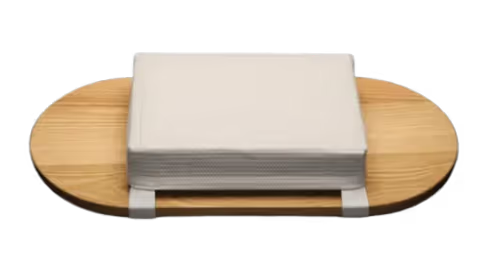
The Neck Pain & Sleep Reset Kit™ by Unusually Usual® –
An EU-registered design, developed based on anthropometric studies of different body types and tested with people of diverse physiques and sleeping positions.
90-Night Guarantee · Lifetime Warranty · Ships Worldwide · EU-Registered
Want to see howwe help people?
Free resources, from the heart

& get a free webinar now!